What property managers need from a plumber
Fast response when a tenant calls. Paperwork that fits your process: certificates of insurance naming your company, invoices with work-order or PO numbers, before-and-after photos. Clear quotes you can pass to owners. And someone who shows up for the unglamorous work too: backflow tests, restroom fixture repairs and water heater replacements.
Typical work across a portfolio
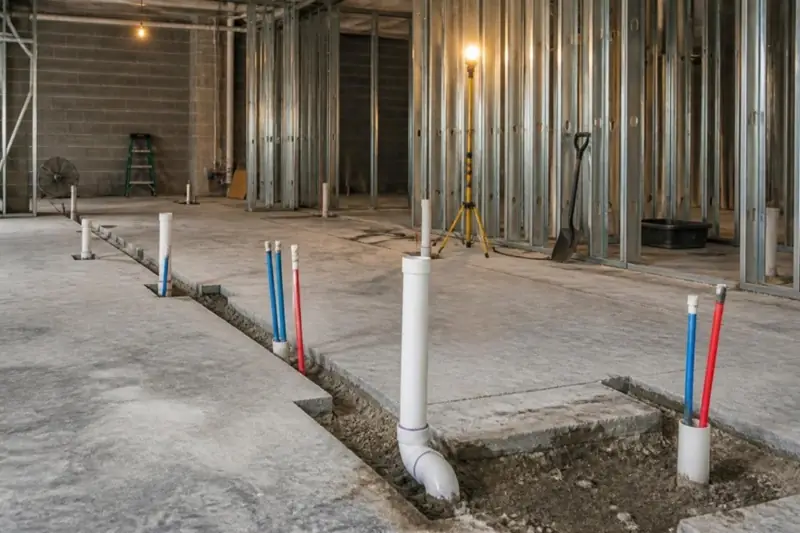
Restroom fixtures: flushometers, sensor faucets, ADA fixtures and partitions plumbing. Annual backflow testing across every building, on one schedule. Tenant finish-outs when spaces turn over. Sewer and drain problems in older retail centers, where restaurants share lines with other tenants. Leak detection when a water bill spikes.
Portfolio maintenance
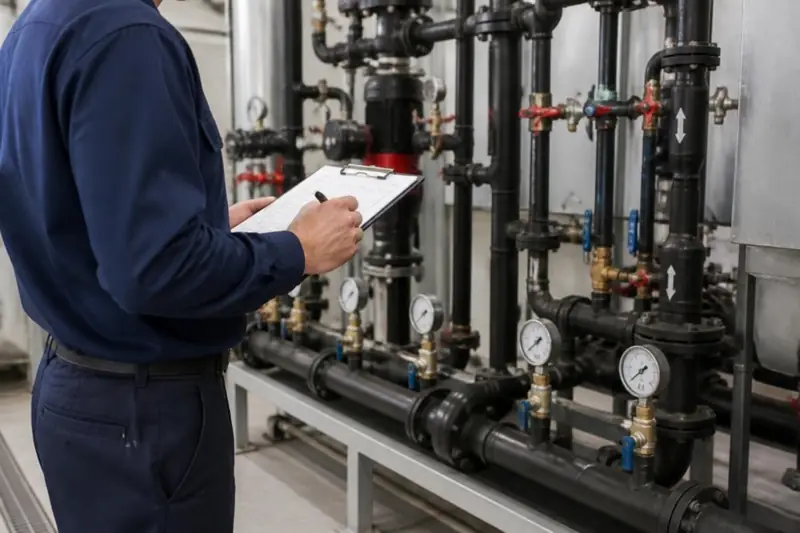
A preventive maintenance plan across your buildings turns plumbing from reactive to budgeted. It covers valve exercising, water heater service, drain jetting where needed, and backflow and grease trap tracking. Consolidated reporting makes it easy to show owners what was done.
One portfolio, several backflow programs
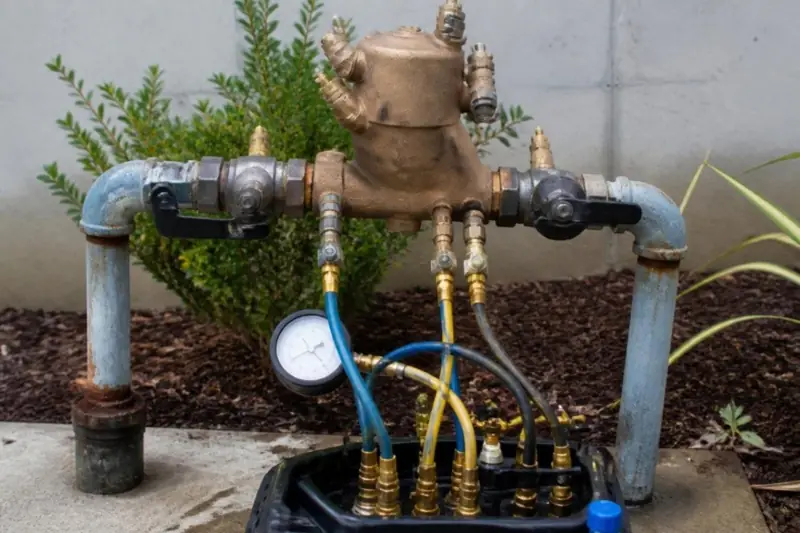
Backflow rules depend on the water provider. That matters when a portfolio crosses city lines. In Austin, Austin Water requires every assembly to be tested every year. Round Rock runs its program through BSI Online and charges testers a $12.95 filing fee per report. Georgetown uses VEPO, with notices 30 to 60 days before a test is due. Kyle uses Vepo's online Envirotrax system and no longer accepts paper reports.
Track due dates in one place with our free compliance calendar, and make sure each report goes to the right utility. Each service-area page lists that city's rules.
Restaurant tenants and grease traps
If a retail center has restaurant tenants, the grease trap is often the landlord's problem when it overflows. In the City of Austin, grease traps must be pumped at least every three months by a permitted hauler, with manifests kept for three years. Ask restaurant tenants for their latest manifest, and see our grease trap service page for what the work involves.
If you bill retail tenants for water through submeters or a formula, PUCT rules apply to strip malls and other multiple-use properties too. That includes registering each property with the PUCT.
Check the license before the first job
Ask any plumbing contractor for the Responsible Master Plumber's license number. Master Plumber numbers start with "M". Verify it, and the insurance on file, with the Texas State Board of Plumbing Examiners. Then add the contractor's certificate of insurance, naming your company, to your vendor file.
Services requested most often
- Preventive Maintenance Plans
- Backflow Testing & Repair
- Tenant Finish-Out & New Construction
- Emergency Commercial Plumbing
- Leak Detection
- Sewer Line Repair & Camera Inspection
Office & Retail Property Management plumbing FAQ
Can the plumber provide a certificate of insurance before starting?
Yes. Request a COI naming your management company and the owner as certificate holders when you schedule the work. Most commercial plumbers can send one the same day.
Can invoices include our work-order or PO numbers?
Yes. Include the work-order or PO number when you request service and it will be referenced on the invoice and report.
Can one plumber handle all the properties in our portfolio?
Often yes, within the service area. For large portfolios, a maintenance agreement with consolidated scheduling and reporting keeps things simple.
Sources
- Austin Water: Backflow Prevention Overview
- City of Round Rock: Backflow Prevention
- City of Georgetown: backflow testing (askGTX)
- City of Kyle: Backflow Prevention Program
- Austin Water: Pretreatment Requirements and FAQ (grease traps)
- Texas State Board of Plumbing Examiners: consumer information
- Public Utility Commission of Texas: Water and Sewer Submetering or Allocation