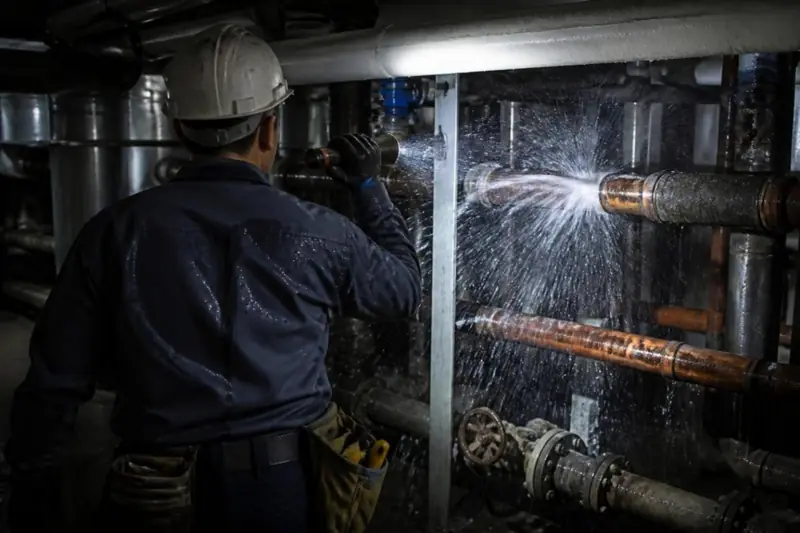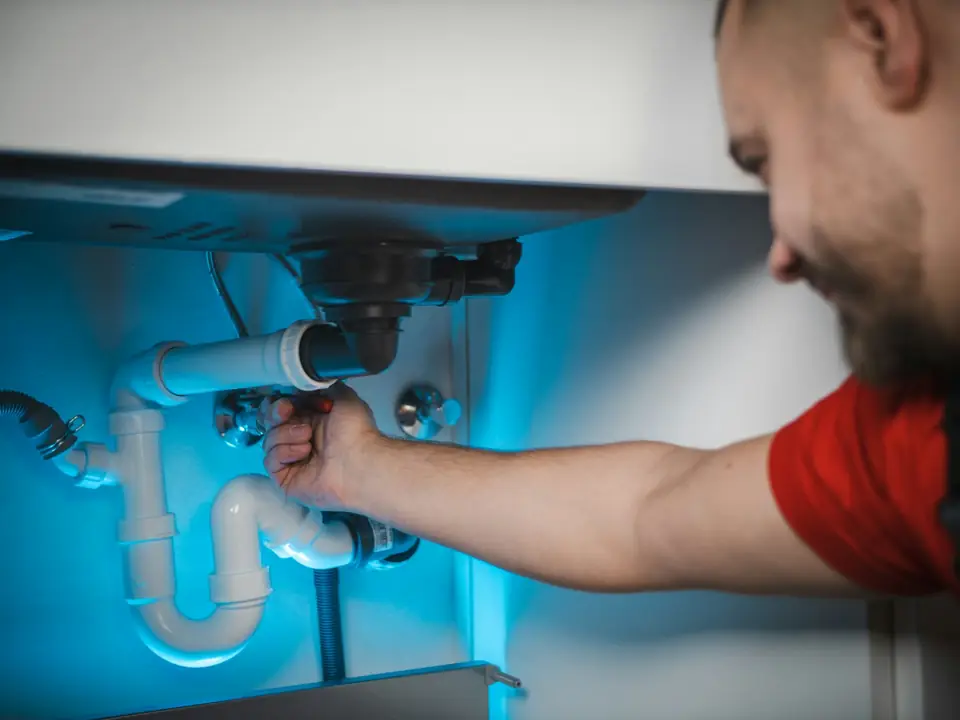
The water service line runs from the meter to the building. Inside, a pressure reducing valve brings street pressure down to a safe level, and in taller buildings a booster pump raises it so upper floors get enough flow. When any of these fail, the whole building feels it: no water, weak flow on upper floors, banging pipes, or leaking fixtures from excessive pressure.
Commercial service lines are larger and often run under parking lots or sidewalks, and PRVs and booster systems are sized for the whole building. That's commercial work, and it usually needs a permit.
What's included
- Main water line and service line leak location and repair
- Service line replacement, including trenchless options where possible
- Pressure reducing valve (PRV) replacement and adjustment
- Booster pump repair and replacement for mid-rise buildings
- Repiping of failing galvanized, copper or polybutylene lines
- Isolation valve installation so zones can be shut off without closing the building
- Water hammer arrestors and expansion control
Call about your water lines if
- The water bill jumped and the meter moves with everything off
- There's a wet spot, sinkhole or running water sound between the meter and the building
- Water pressure is too high (banging pipes, leaking fixtures) or too low on upper floors
- Water is discolored or rusty, which can point to old galvanized pipe
- You can't shut off part of the building without shutting off all of it
Water lines in Austin buildings
Austin's expansive clay soils shift between wet and dry seasons, which stresses buried service lines and the joints where they enter the building. Hard freezes can split lines in shallow or exposed areas. See our freeze-proofing checklist.
Street pressure varies across Austin's hilly terrain. Buildings at lower elevations can see high incoming pressure, which makes a working PRV essential to protect fixtures, water heaters and equipment. Mid-rise buildings on higher ground may need booster pumps to serve upper floors.
Your side of the meter vs. Austin Water's
Who fixes a water line depends on which side of the meter the problem is on. Inside Austin Water's service area, Austin Water maintains the public main and the meter, and generally the line between them. The service line from the meter to the building, and all the piping inside, are generally the property owner's.
If water is coming up in the street or at the meter box, report it to Austin Water at (512) 972-1000, option 1, at any hour, or to Austin 3-1-1 from 7 a.m. to 9 p.m. (Austin Water contact page). Other cities' customers call their own water utility. If the leak is between the meter and the building, a licensed plumber handles it, usually under a Commercial Plumbing Service Line Permit. Pressure problems inside the building, such as a failed PRV, are also the plumber's job.
Main water line repair
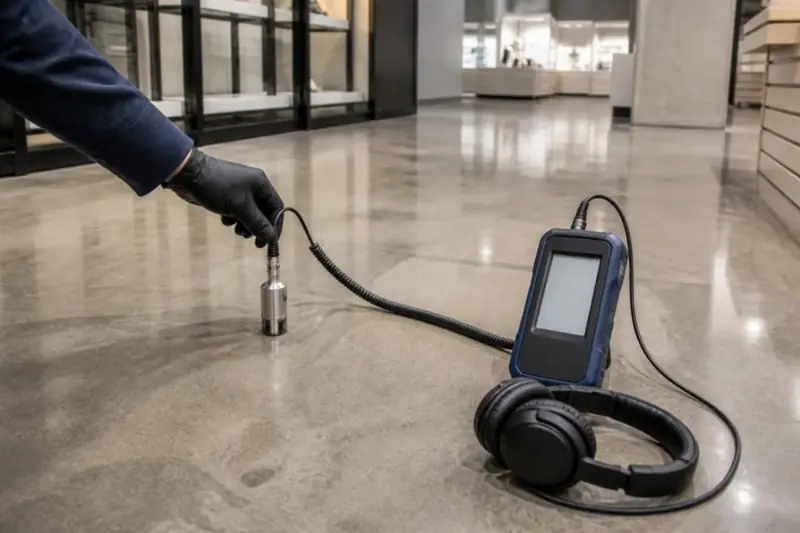
A main water line leak usually shows up as a high water bill, a meter that keeps moving when the building is closed, or a wet or sinking spot in the landscaping or pavement. The plumber confirms the leak with a meter test, pinpoints it with acoustic leak detection, and then repairs the section or replaces the line.
If the line is old and has leaked more than once, replacing it is usually the better value. Trenchless methods can often replace a service line under pavement through two small pits instead of a long trench.
Pressure reducing valves and booster pumps
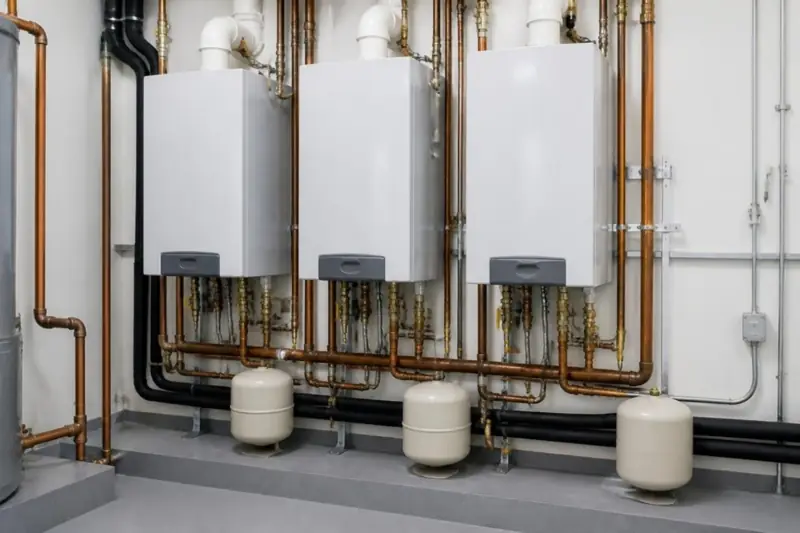
A PRV wears out over time. When it fails, building pressure creeps up to street pressure, which stresses every fixture, flushometer and water heater relief valve in the building. Signs include banging pipes, running toilets and dripping relief valves. Replacing a PRV is a short job when there are isolation valves on both sides.
Booster pump systems need periodic service: pressure switches, tanks, check valves and controls. A failing booster shows up as low pressure or no water on upper floors during busy times.
Repiping materials compared
Repiping replaces failing galvanized, old copper or polybutylene lines. The plumbing code sets which materials are allowed for each use, and the plumber confirms the choice when the permit is pulled. The common options:
| Material | Strengths | Watch for |
|---|---|---|
| Copper | Long life, heat tolerant, widely used in commercial work | Higher material cost; skilled joining (solder or press) |
| PEX | Flexible, fewer fittings, quick to install in occupied buildings | Must be protected from sunlight; size and fitting limits |
| CPVC | Lower cost, resists corrosion | Can become brittle with age; temperature and pressure limits |
How it works
Test and locate
Meter, pressure and acoustic tests confirm the problem and narrow it to the service line, a zone or the PRV or booster system.
Scope the options
Repair, replacement or reroute, with the cost and how long water will be off for each.
Plan the shutoff
Shutoffs are scheduled around your business hours, with tenant notice in multi-tenant buildings.
Repair and test
The work is completed, permitted where required, and the system is pressure-tested.
What does water line repair cost in Austin?
Costs depend on line size, depth, length and what's on top of it (landscaping, asphalt or concrete), and on the size of the PRV or booster system.
| Service | Typical range |
|---|---|
| Leak location (service line) | $300 – $800 |
| Service line spot repair | $800 – $3,500 |
| PRV replacement (commercial) | $600 – $2,500+ |
| Service line replacement | Quoted after inspection |
Planning estimates, not quotes (2026). Final price depends on size, access and parts. Your plumber confirms it before work starts. How we estimate
Get a free quoteSee all commercial plumbing costs
Property types we match plumbers for
Water Lines FAQ
Who is responsible for the water line from the meter to the building?
In most cases the property owner is responsible for the service line on their side of the meter, and the water utility is responsible for the meter and the main. Check with your utility if the leak is near the meter.
What water pressure should a commercial building have?
Austin enforces the 2024 Uniform Plumbing Code with local amendments, which limits static water pressure inside buildings, so most buildings are set well below street pressure with a PRV. If pressure at a fixture is very high or very low, have a plumber test it and check the PRV.
How long will the water be off for a main line repair?
A spot repair often takes a few hours. A replacement can take longer. Shutoffs are planned around your business hours whenever possible, and isolation valves can limit how much of the building is affected.
Do I need a permit to replace a water service line in Austin?
Usually, yes. In the City of Austin, commercial service lines from the public right-of-way to within 5 feet of the building fall under a stand-alone Commercial Plumbing Service Line Permit, and repiping inside the building is permitted plumbing work. The licensed plumber pulls the permit as part of the job.
Still have questions?
Licensing, permits, pricing and emergencies are covered in the full FAQ.