Fats, oils and grease (FOG) from dishwashing and cooking cool down in the drain line, harden, and stick to the pipe. A grease trap slows the wastewater down so grease floats to the top and solids sink, while the cleaner water in the middle flows on to the sewer. Once a trap is too full it can't do that, and grease goes straight into your lines and the city's.
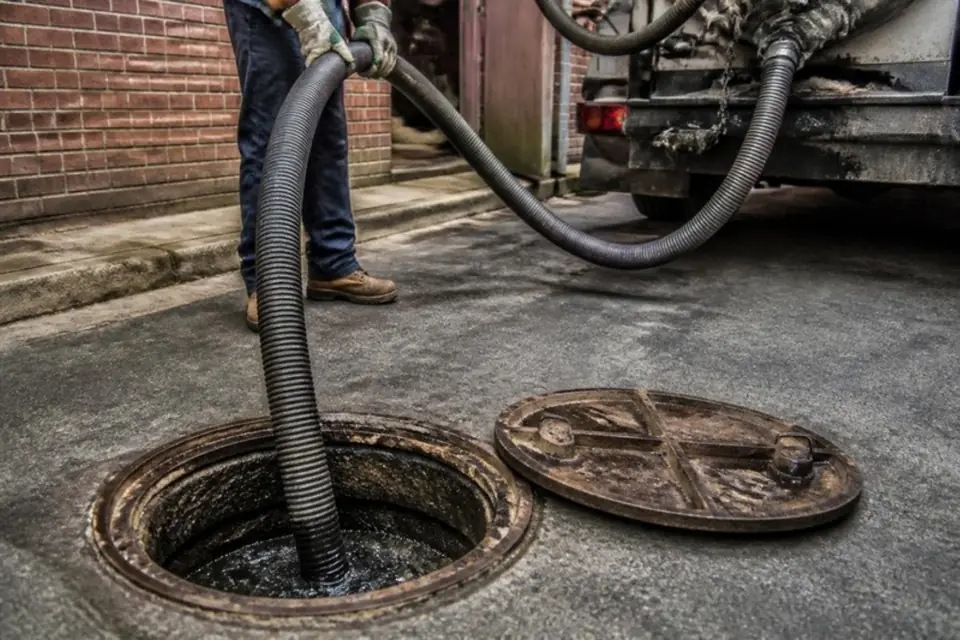
There are two common types. Small grease traps sit under or near a sink inside the kitchen. Large grease interceptors are buried outside, often in the parking lot or alley, and hold hundreds or thousands of gallons. Inside the City of Austin, Austin Water doesn't approve grease traps with less than 100 gallons of liquid capacity, so most Austin kitchens are served by an in-ground interceptor.
What's included
- Scheduled pump-outs for indoor grease traps and in-ground interceptors
- Hauling and disposal manifests
- Baffle, tee, lid and outlet repairs
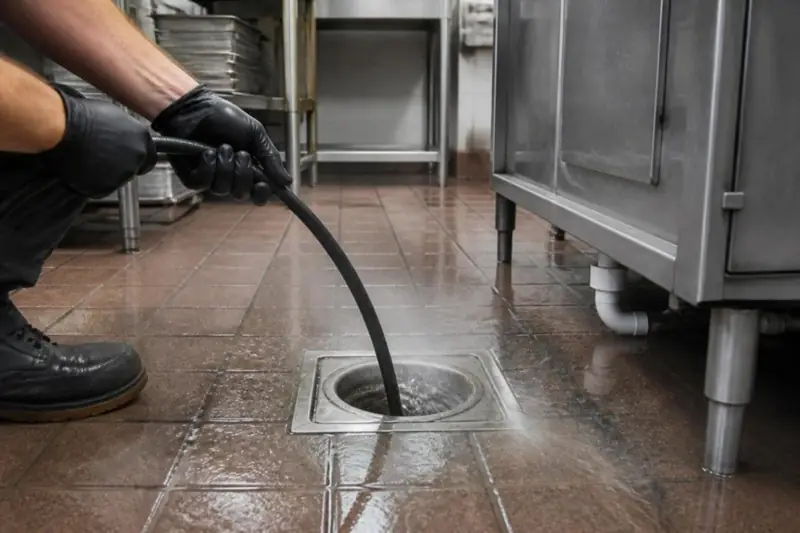
- Jetting of kitchen lines from the trap back to the fixtures
- New grease trap or interceptor installation and sizing
- Replacement of cracked or corroded traps
- Help setting a pumping schedule that fits your kitchen volume
Your grease trap needs service if
- Kitchen sinks or floor drains drain slowly or back up
- There's a strong rotten or sewer smell in the kitchen or near the lid
- Grease is visible at the trap outlet or in the downstream cleanout
- It has been longer than your normal pumping interval
- An inspector noted grease buildup or missing records
Grease trap requirements in Austin
- Pumping Every 3 months
- Emptied and cleaned at least every three months, or sooner at 50% of the wetted height (City Code §15-10-197).
- Approval Austin Water
- Every food-service business needs a grease interceptor approved by Austin Water.
Planning a new kitchen or a finish-out? Estimate the interceptor with our grease trap size calculator, which uses Austin Water's fixture-unit method.
The pumping interval comes from Austin City Code §15-10-197. The work must be done by a liquid waste hauler licensed by TCEQ and permitted by the City, with trip ticket manifests kept for three years. Austin Water's Industrial Waste staff inspect traps while they're being serviced. See Austin Water's pretreatment FAQ.
New restaurants and kitchen remodels also need the trap or interceptor sized correctly under the plumbing code, and the work permitted and inspected. An undersized interceptor means more frequent pumping for as long as you're in the space. Get the size right during finish-out, using Austin Water's grease trap sizing and design criteria.
Grease trap pumping schedules
Grease trap pumping is the part of grease trap cleaning that keeps you compliant. The right interval depends on the trap's size, how many meals you serve, your menu (fryers and grills produce far more grease), and how well staff scrape plates before washing. A small indoor trap in a busy kitchen can fill in weeks. A large outdoor interceptor may go a few months.
In the City of Austin the longest allowed interval is three months, and the trap must be serviced sooner if the final compartment reaches 50% of its wetted height. The safest way to set a schedule is to measure. After the first two or three pump-outs, the service record shows how full the trap was each time, and the interval is shortened if needed. Use the free Austin compliance calendar to track the next due date. Ask for a contractor who keeps the schedule and sends reminders, so pumping doesn't depend on someone remembering.
Grease trap vs. grease interceptor
The words are often used for the same thing, but the two units are serviced differently.
| Grease trap | Grease interceptor | |
|---|---|---|
| Where it sits | Under or near a sink, inside the kitchen | Buried outside, often in the lot or alley |
| Typical size | Small under-sink units; inside Austin, Austin Water won't approve under 100 gallons of liquid capacity | Hundreds to thousands of gallons |
| Serves | One or a few fixtures | The whole kitchen |
| Pumped by | Permitted liquid waste hauler | Permitted liquid waste hauler with a pump truck |
| Austin pump-out rule | At least every 3 months, sooner at 50% of wetted height | Same rule |
Which one you have changes how it's pumped and how often it fills. The Austin minimums in the table come from Austin Water's grease trap sizing and design criteria. Either way, keep every trip ticket manifest on file, as covered under the requirements above.
Grease trap and grease interceptor installation
A new restaurant, a change of use, or a kitchen remodel usually means a new grease trap or grease interceptor installation. Sizing is based on the fixtures that drain to it and the expected flow, under the plumbing code and the utility's pretreatment rules. The work is permitted and inspected.
Location matters as much as size. The trap or interceptor needs to be reachable by a pump truck hose, have lids that can be opened without moving equipment, and sit where it can be inspected. During a tenant finish-out, settle these details before the slab is poured. See our restaurant plumbing page for the rest of a kitchen's plumbing needs.
How it works
Set the schedule
Tell us your trap type, size and how busy the kitchen is. The plumber suggests a pumping interval.
Pump-out
The trap or interceptor is fully pumped, the walls and baffles scraped, and the waste hauled to an approved facility.
Inspect and repair
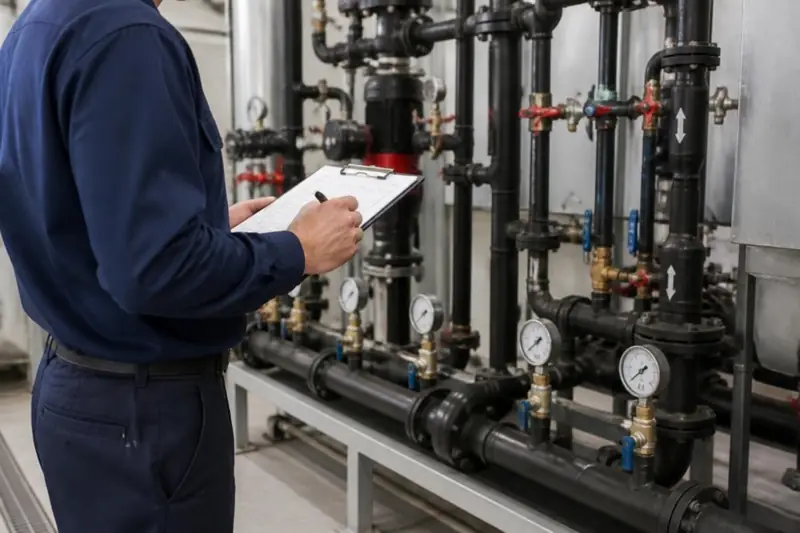
Baffles, tees, lids and seals are checked. Problems are photographed and quoted.
Records
You get a service record and manifest to keep on file for inspections.
What does grease trap service cost in Austin?
Pricing depends mostly on trap size, access and how full it is. For City fees and a yearly budget, see our grease trap cleaning cost guide.
| Service | Typical range |
|---|---|
| Indoor grease trap pump-out | $150 – $400 |
| In-ground interceptor pump-out | $400 – $1,200+ |
| Kitchen line jetting (with pump-out) | $250 – $600 |
| New indoor grease trap installed | $1,500 – $5,000 |
Planning estimates, not quotes (2026). Final price depends on size, access and parts. Your plumber confirms it before work starts. How we estimate
Get a free quoteSee all commercial plumbing costs
Property types we match plumbers for
Grease Traps FAQ
How often should a restaurant grease trap be pumped?
In the City of Austin, at least once every three months, and sooner if grease and solids reach 50% of the wetted height in the final compartment (Austin City Code §15-10-197). Busy kitchens with small traps often need service monthly. Cities outside Austin set their own rules.
What's the difference between a grease trap and a grease interceptor?
A grease trap is a small unit, usually inside the kitchen near the sink. A grease interceptor is a large tank, usually buried outside, that serves the whole kitchen. Interceptors need a pump truck. Inside Austin, both must be pumped by a permitted liquid waste hauler.
Can I clean the grease trap myself?
Not in the City of Austin. Grease traps must be emptied and cleaned by a liquid waste hauler licensed by TCEQ and permitted by the City, with a trip ticket manifest for every service. Staff can scrape plates and keep grease out of drains between pump-outs, which stretches the time between services.
Why does my kitchen smell like sewer near the trap?
A full trap, a missing or damaged baffle, or a bad lid seal can all cause odors. Pumping and an inspection of the trap's internals usually find the cause.
Still have questions?
Licensing, permits, pricing and emergencies are covered in the full FAQ.