The sewer lateral carries all of a building's wastewater to the city main. When it cracks, sags, separates at a joint or fills with roots, every fixture in the building feels it. Commercial laterals are often under parking lots, sidewalks or the building slab, so digging to find the problem is expensive and disruptive.
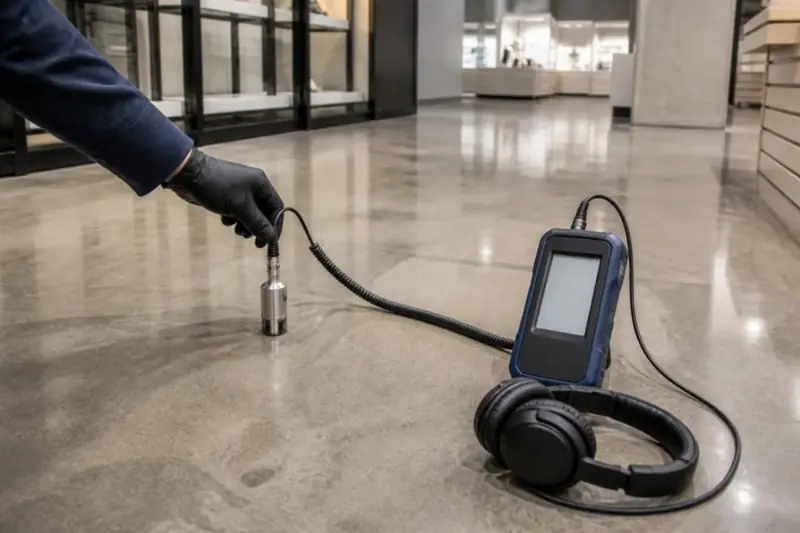
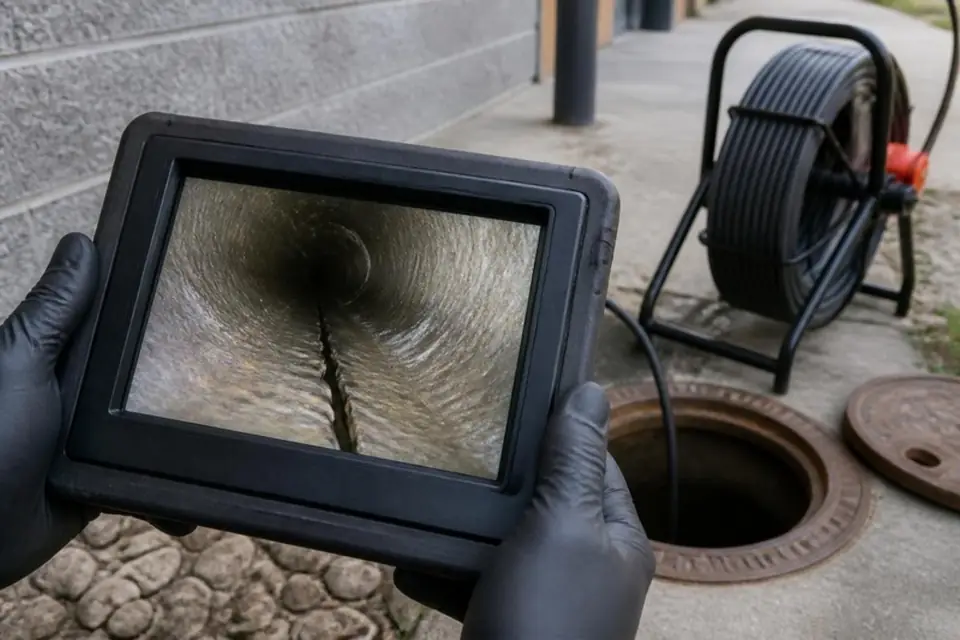
A camera inspection runs a waterproof camera through the line from a cleanout, recording video and the distance to every defect. A locator above ground then marks the exact spot and depth. That turns a "we'll have to dig and see" into a specific scope of work.
What's included
- Sewer camera inspection with recorded video
- Line locating and depth marking
- Cured-in-place pipe (CIPP) lining
- Pipe bursting replacement
- Spot repairs of single failed sections
- Traditional excavation and replacement
- Cleanout installation
- Pre-lease and pre-purchase sewer inspections
Call for a sewer inspection if you notice
- Recurring backups that return weeks after clearing
- Sewage odor outside the building or in the parking lot
- Soggy or sinking spots in landscaping or pavement
- Multiple fixtures gurgling when water drains elsewhere
- You're buying or leasing an older building
Sewer lines in Austin soil
Much of eastern Austin sits on Blackland Prairie clay, which the USDA describes as having high shrink-swell potential: it swells when wet and shrinks in drought. That movement can crack pipes, separate joints and create sags ("bellies") where waste collects. West Austin's shallow limestone makes excavation slow and expensive, which is where trenchless methods pay off.
Many older commercial buildings in Austin still have original cast iron or clay laterals. If you're signing a long lease on an older building, a camera inspection before you sign can save you from inheriting a failing line. In Austin Water's service area, the private lateral from the building to the City's main is the property owner's responsibility (City Code Chapter 15-11), and commercial service-line work needs a stand-alone plumbing permit.
What a sewer camera inspection shows
A sewer camera inspection records the inside of the line from the cleanout to the city main. The footage shows cracks, offset or separated joints, root intrusion, sags where waste sits, grease buildup, collapsed sections and the pipe material. Every defect is logged with its distance from the access point, and a locator marks its position and depth on the surface.
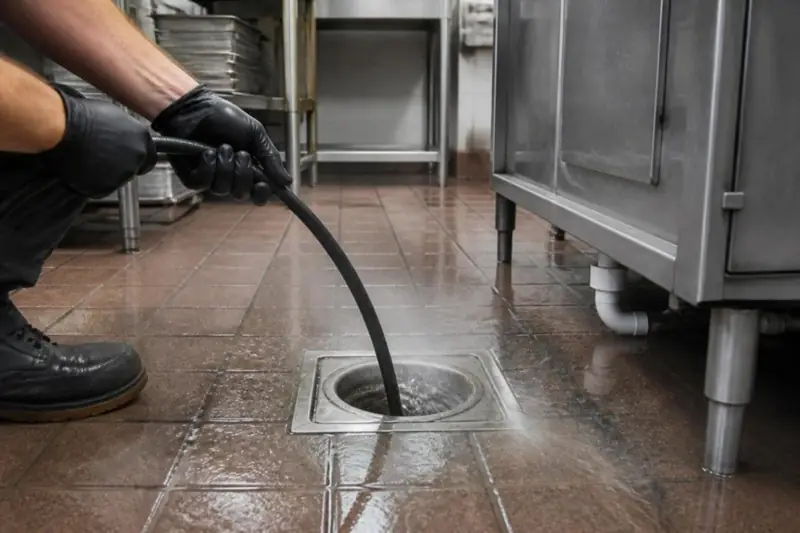
You get the video and a written summary. Property managers use it to compare repair bids, and buyers and tenants use it to negotiate before signing. If the camera shows buildup rather than damage, the fix is usually hydro jetting, not a repair.
Trenchless sewer repair in Austin
Trenchless sewer repair replaces or relines a damaged line through one or two small access pits instead of a trench along its whole length. That matters at commercial properties, where the line often runs under a parking lot, a sidewalk, a loading dock or the building itself.
Cured-in-place pipe (CIPP) lining installs a resin-saturated liner that hardens into a new pipe inside the old one. It suits cracked or root-damaged lines that still hold their shape. Pipe bursting pulls a new pipe through the old one while breaking it outward, and suits lines that are too damaged to line. Severe sags and fully collapsed sections usually still need excavation.
Sewer repair methods compared
The camera footage decides which method fits. Most commercial jobs come down to four options:
| Method | Fits when | Disruption |
|---|---|---|
| Spot repair | One bad joint or a short broken section | One small excavation |
| Cured-in-place lining (CIPP) | Cracked or root-damaged pipe that still holds its shape | Access at the cleanouts; little digging |
| Pipe bursting | Pipe too damaged to line, or a line that needs a larger size, on a straight run | Two small pits |
| Open-trench replacement | Collapsed sections, deep sags, or a line that needs a new grade or route | Trench along the line; pavement restored after |
Ask for at least two options side by side, with the cost and the days of disruption for each. Our sewer line replacement cost guide works through a 60-foot example under a parking lot.
Sewer camera inspections for leases, purchases and restaurant spaces
A sewer camera inspection is one of the cheapest forms of due diligence before signing a commercial lease or buying a building. Restaurant spaces matter most, because years of grease from previous tenants and an undersized or failing lateral can become the new tenant's problem. Ask who is responsible for the sewer lateral under the lease before you sign.
For a pre-lease or pre-purchase inspection, ask for the full video, a written summary with the footage distance of each defect, the pipe material and diameter, and the condition at the connection to the city main. That record also helps later, as a baseline for comparing future inspections.
Sewer line replacement for commercial buildings
Full sewer line replacement is the right call when the camera shows damage along most of the line, when an old clay or cast iron lateral has failed in several places, or when the line is undersized for a new use, such as a restaurant moving into a former retail space.
Replacement is permitted work and is usually coordinated with the city's connection at the main. Ask what has to be restored afterward (concrete, asphalt, landscaping) for each option.
How it works
Clear and inspect
The line is cleared if needed, then inspected with a camera. Video and footage distances are recorded.
Locate and mark
Defects are located above ground and marked with depth, so the scope is precise.
Choose the method
You get options, such as lining, bursting, spot repair or excavation, with prices and downtime for each.
Repair and verify
After the repair, a final camera pass confirms the line is sound.
What do sewer camera inspection and sewer line repair cost in Austin?
Sewer repair varies more than any other plumbing job. Line length, depth, diameter, access and the repair method all matter. A camera inspection is the first step to an accurate quote.
| Service | Typical range |
|---|---|
| Sewer camera inspection | $250 – $600 |
| Spot repair (excavated) | $2,500 – $8,000 |
| Trenchless lining / bursting (per foot) | $150 – $350 |
| Full excavated replacement | Quoted after inspection |
Planning estimates, not quotes (2026). Final price depends on size, access and parts. Your plumber confirms it before work starts. How we estimate
Get a free quoteSee all commercial plumbing costs
Property types we match plumbers for
Sewer Line Repair FAQ
What is trenchless sewer repair?
Trenchless repair fixes a sewer line through small access points instead of a long trench. Cured-in-place lining installs a resin-soaked liner that hardens into a new pipe inside the old one. Pipe bursting pulls a new pipe through while breaking the old one outward.
Is trenchless sewer repair always possible?
No. Collapsed sections, severe sags or pipes that are too small may need excavation. A camera inspection shows which options fit your line.
How long does a commercial sewer repair take?
Lining and bursting are often completed in one to two days. Excavated repairs can take longer, especially under concrete. The plumber can often phase the work to keep your business open.
Should I get a sewer inspection before leasing a space?
For older buildings, and especially for restaurant spaces, yes. A camera inspection is inexpensive compared with the cost of a failing sewer line becoming your problem during the lease.
Still have questions?
Licensing, permits, pricing and emergencies are covered in the full FAQ.
Related guides
- How Much Does Sewer Line Replacement Cost in Austin? (2026)
- How Much Does Hydro Jetting Cost in Austin? (2026)
- How Much Does Leak Detection Cost in Austin? (2026)