What goes wrong in restaurant plumbing
Almost every restaurant plumbing emergency traces back to three things: grease, hot water and volume. Grease hardens in kitchen lines and grease traps. Hot water demand peaks exactly when the dish machine, prep sinks and handwashing all run at once. And a busy restaurant puts more water through its drains in a night than a house does in a week.
A backup during service can mean closing the kitchen. A dead water heater means you legally can't serve. That's why the most important plumbing decisions for a restaurant are the preventive ones.
What a good restaurant plumbing program looks like
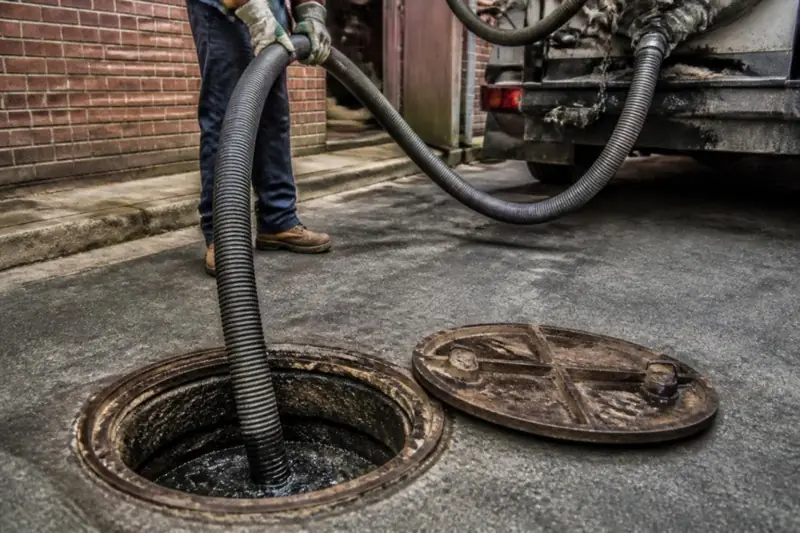
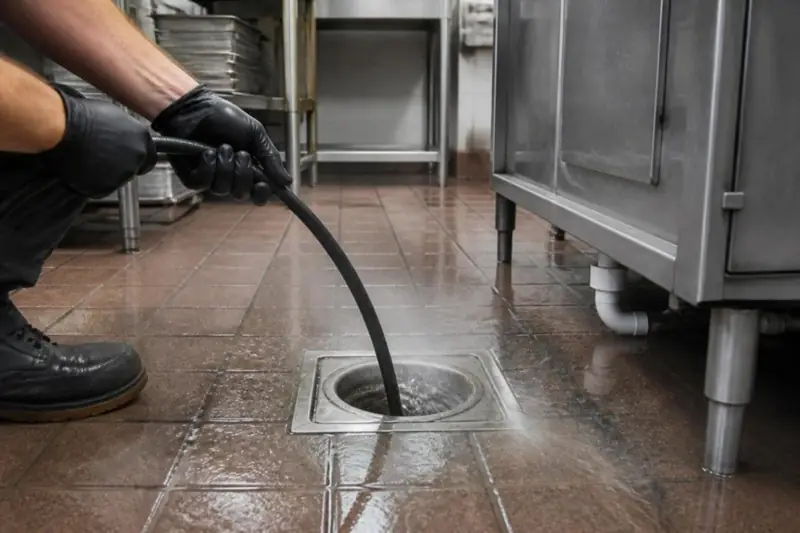
Grease trap pumping on a fixed schedule, with records kept for inspections. Kitchen line jetting every few months on busy lines, rather than snaking the same drain again and again (see hydro jetting costs). Water heater flushing or descaling, because Austin's water is moderately hard (see the water hardness guide). And backflow testing on dish machines, soda systems and the main service where required.
When you take over an existing restaurant space, add a camera inspection of the kitchen and main lines. Previous tenants' grease stays in the pipe.
Opening a new kitchen? Estimate the interceptor size with the grease trap size calculator before plan review.
Gas lines for commercial kitchens
Ranges, fryers, ovens and gas water heaters all hang off one gas system, and adding equipment often means the existing line is too small. A licensed plumber sizes the gas piping for the total load, installs shutoff valves at each appliance, and pressure-tests the system before the inspection.
If you smell gas in the kitchen, get everyone out, then call 911 and your gas utility from outside. After the utility has made it safe, the gas line repair is plumbing work for a licensed plumber.
Scheduling around service
Most restaurant plumbing work can happen before opening or after close. Jetting, grease trap pumping and water heater replacements are routinely scheduled overnight. For emergencies, call the emergency line.
Services requested most often
- Grease Trap Cleaning & Installation
- Drain Cleaning & Hydro Jetting
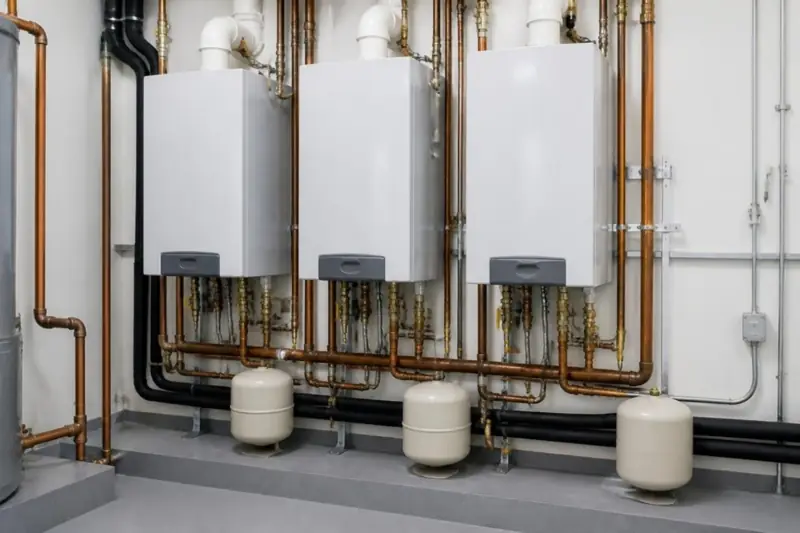
- Commercial Water Heaters & Boilers
- Emergency Commercial Plumbing
- Backflow Testing & Repair
- Tenant Finish-Out & New Construction
Restaurants & Commercial Kitchens plumbing FAQ
How often should a restaurant have its kitchen drains jetted?
Busy kitchens commonly jet the main kitchen line every 3 to 12 months, depending on menu, volume and how well the grease trap is maintained. A camera inspection after the first jetting shows how fast grease builds up and sets the right interval.
What should a restaurant do if the grease trap overflows during service?
Stop running water to the affected sinks and the dish machine, keep staff away from the overflow, and call for emergency service. The trap needs to be pumped, and the line from the trap to the sewer usually needs to be jetted.
Can a plumber work in my kitchen while we're open?
Emergencies get handled whenever they happen. Planned work such as jetting, water heater replacement and fixture repairs is usually done before opening or after close so the kitchen isn't disrupted.