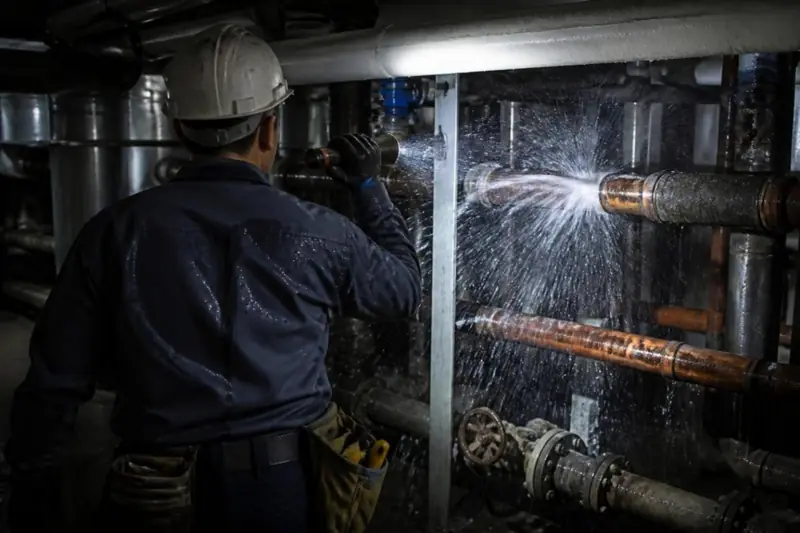
Hidden leaks are expensive twice: once on the water bill, and again when the water damages flooring, drywall, inventory or the foundation. In commercial buildings the first sign is often a water bill that suddenly jumps, or a meter that keeps moving when the building is closed.
Finding the exact spot matters because the repair usually means cutting concrete or opening a finished wall. Precise detection turns a large demolition project into a small, targeted opening.
What's included
- Slab leak detection under concrete floors
- Acoustic leak detection for supply lines
- Thermal imaging for hot water line leaks
- Pressure and isolation testing of piping zones
- Buried water service line leak location
- Irrigation system leak detection
- Leak repair, spot repair or rerouting of lines
Suspect a hidden leak if
- Your water bill jumped with no change in use
- The water meter moves when all fixtures are off
- Warm spots on the floor (hot water slab leak)
- Damp carpet, lifting tile or musty smells
- Sounds of running water in walls or under the floor
Slab leaks in Austin
Many commercial buildings in Central Texas are built on concrete slabs, with water lines running under or through them. Expansive clay soils in much of Austin move with wet and dry cycles, which stresses pipes under the slab. Hot water lines, which expand and contract with every use, are especially prone to slab leaks.
Austin Water's My ATX Water smart meters show near-real-time daily water use and can send notifications for sudden increases that could indicate a leak. A jump you can't explain is a good reason to book leak detection. Before any leak repair in a slab, the plumber should confirm the leak's location with at least two methods. Rerouting the line overhead or through walls is sometimes cheaper and less disruptive than breaking the slab.
Water leak detection for whole buildings
In a multi-tenant building, water leak detection starts with figuring out which part of the system is leaking. The plumber reads the meter with everything off, then isolates zones (domestic cold, domestic hot, irrigation, fire line, individual suites) until the leaking zone is found. Only then does the acoustic and thermal search begin.
Property managers can catch leaks early by watching the water bill month to month and running the meter check below. After an Austin freeze, a quick check of irrigation lines, sprinkler risers and rooftop piping can find splits before they flood a suite. See emergency plumbing if water is already coming through.
Check the meter before you call
- Pick a time when the building is closed, and make sure ice machines, irrigation and cooling equipment aren't running.
- Note the meter reading, or photograph the dial with its low-flow indicator.
- Wait 30 to 60 minutes without using any water.
- If the reading changed or the low-flow indicator moved, water is leaking somewhere. Book leak detection and tell the plumber what you saw.
Where commercial leaks usually hide
Under the slab. Domestic hot and cold lines running under the floor of retail, restaurant and office space. Hot water lines fail most often, because they expand and contract every time water runs.
Between the meter and the building. Buried service lines under parking lots and landscaping. These leaks often show up first as a high water bill or a soft, wet spot in the ground.
Irrigation systems. Cracked laterals, broken heads and failed valves can lose large amounts of water unnoticed, especially when the system runs at night.
Inside walls and ceilings. Supply lines to upper-floor restrooms and break rooms, and condensate and drain lines above drop ceilings, often reveal themselves as stained ceiling tiles.
Equipment connections. Ice machines, dish machines, cooling tower makeup lines, water heaters and booster pumps all have valves and fittings that wear out.
Leak detection methods compared
Meter and pressure testing comes first. With every fixture off, a moving meter confirms a leak. Closing valves one zone at a time (domestic cold, domestic hot, irrigation, individual suites) and watching the pressure gauge shows which zone is losing water. This step decides where the expensive equipment goes.
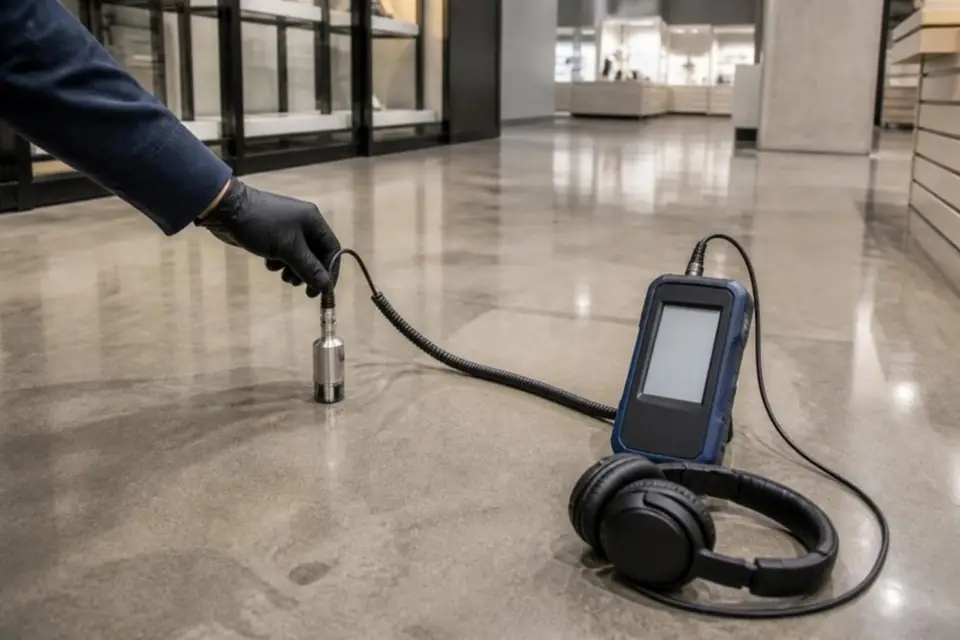
Acoustic detection uses ground microphones and pipe sensors to hear water escaping under pressure. It works well on copper and steel under concrete. Correlators compare the sound reaching two sensors on the same line and calculate where the leak sits between them.
Thermal imaging shows warm or cool patterns from leaking hot or cold water under floors and inside walls. It's fast and non-invasive but needs a temperature difference to work. Tracer gas (a safe hydrogen and nitrogen mix) is pushed into a drained line and detected where it rises through the slab or soil. It's used when acoustic methods can't find the leak, especially on plastic pipe.
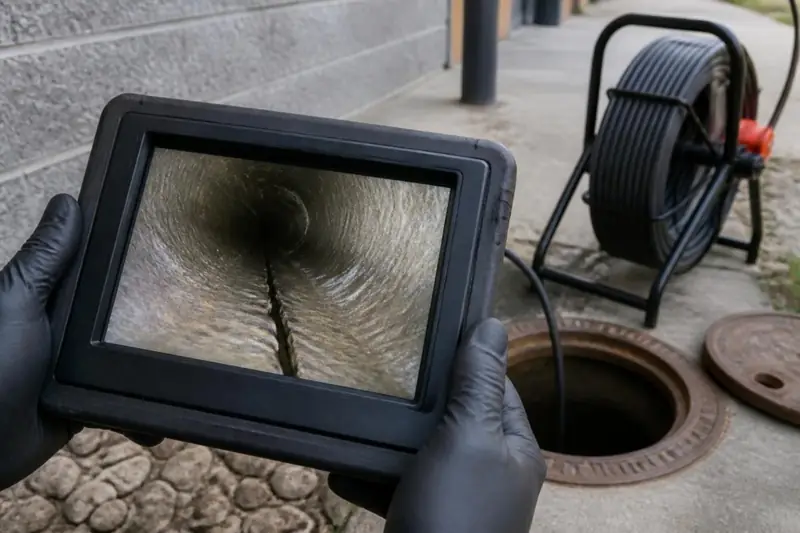
Camera inspection is used for drain and sewer leaks rather than pressurized supply lines. A slab leak under a restaurant may be a cracked drain line, not a water line. Good leak detection rules both out before anyone cuts concrete.
| Method | Best for | Limits |
|---|---|---|
| Meter and pressure testing | Confirming a leak and narrowing it to a zone | Doesn't pinpoint the spot |
| Acoustic listening and correlators | Copper and steel lines, long buried service lines | Weak on plastic pipe, which carries sound poorly |
| Thermal imaging | Hot water leaks under floors and in walls | Needs a temperature difference |
| Tracer gas | Plastic pipe and leaks acoustics can't find | The line must be drained first |
| Camera inspection | Drain and sewer line leaks | Not for pressurized supply lines |
Slab leak repair options for commercial buildings
Direct repair means cutting a small opening in the slab at the pinpointed location, repairing the pipe and patching the concrete. It's the right choice for a single leak in an otherwise healthy line, and precise location keeps the opening small.
Rerouting abandons the leaking section under the slab and runs a new line through walls or ceilings. It avoids breaking the floor, which matters in occupied retail and office space, and it removes the risk of another leak in the same buried pipe. Repiping replaces a whole zone when the pipe has failed in several places.
In multi-tenant buildings, the repair plan should also cover water shutoffs and tenant notice, floor coverings and finishes to restore, and who pays which part of the job under the lease. Ask for photos and a written scope you can share with owners and insurers.
Leak detection near you
Leak detection specialists cover Austin and the surrounding cities on our service areas page. Detection equipment is specialized, so it's worth asking whether the plumber who comes out is doing the detection themselves or calling in someone else. When we refer a plumber, we look for one who can handle both the locating and the repair or reroute, so you deal with one company.
How it works
Confirm there's a leak
Meter and pressure tests confirm a leak and narrow it to a zone: hot, cold, irrigation or service line.
Pinpoint
Acoustic and thermal equipment locate the leak to within a small area.
Choose the repair
Direct repair, reroute or line replacement, with cost and disruption for each.
Repair and retest
The leak is fixed and the system is pressure-tested to confirm.
What does leak detection cost in Austin?
Detection is usually a flat or hourly fee. Repair cost depends heavily on the location and the chosen method. For a free meter test and Austin Water's leak bill adjustment, see our leak detection cost guide.
| Service | Typical range |
|---|---|
| Leak detection service | $300 – $800 |
| Slab leak repair (direct access) | $2,000 – $5,000 |
| Line reroute | $1,500 – $6,000+ |
| Irrigation leak locate & repair | $250 – $900 |
Planning estimates, not quotes (2026). Final price depends on size, access and parts. Your plumber confirms it before work starts. How we estimate
Get a free quoteSee all commercial plumbing costs
Property types we match plumbers for
Leak Detection FAQ
How do plumbers find a leak under a concrete slab?
They isolate which line is leaking with pressure tests, then use acoustic ground microphones to hear the leak through the concrete and thermal cameras to find heat from hot water leaks. That narrows the leak to a small area before any concrete is cut.
Is it better to repair a slab leak or reroute the pipe?
It depends. A single leak in an otherwise good line is usually repaired directly. If the pipe is old and likely to leak again, rerouting it above the slab is often the better long-term value.
Will insurance cover a slab leak?
Many commercial policies cover water damage from sudden leaks but not the pipe repair itself. Coverage varies, so check your policy and document everything with photos.
How long does commercial leak detection take?
Most single-building leak detection jobs take a few hours: time to confirm the leak, isolate the zone and pinpoint it. Large multi-tenant buildings, or leaks in plastic pipe that need tracer gas, can take longer. The plumber can usually tell you the location the same day.
Will you need to break up my floor to find the leak?
No. Detection itself is non-invasive. Concrete is only opened for the repair, after the leak has been pinpointed, and then only in a small area. If the floor finish is expensive or the space is occupied, rerouting the line can avoid opening the slab altogether.
Can you find a leak in the water line to the building?
Yes. Buried service line leaks between the meter and the building can be located acoustically and repaired or replaced, often with minimal trenching.
Still have questions?
Licensing, permits, pricing and emergencies are covered in the full FAQ.
Related guides
- Freeze-Proofing Commercial Buildings in Austin: A Checklist for Property Managers
- How Much Does Sewer Line Replacement Cost in Austin? (2026)
- How Much Does Leak Detection Cost in Austin? (2026)