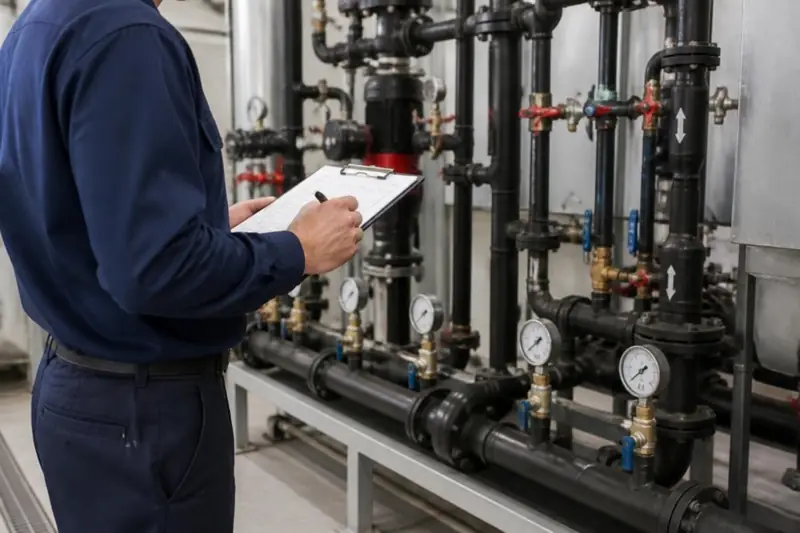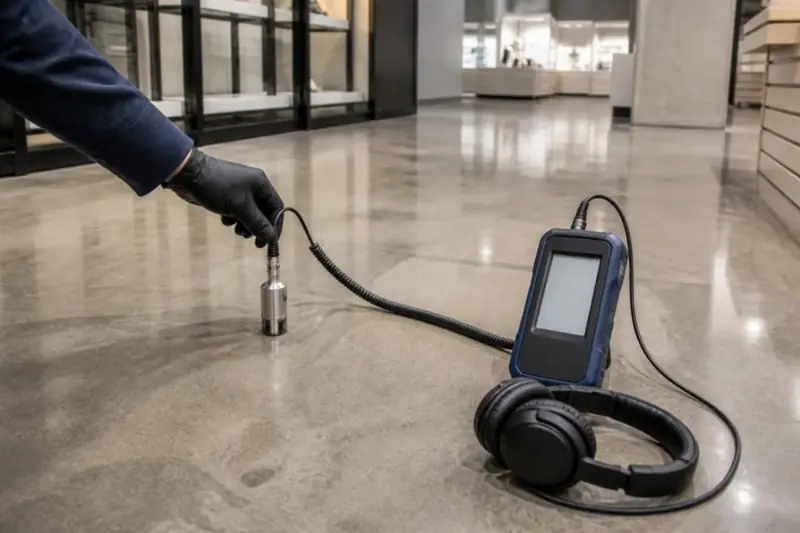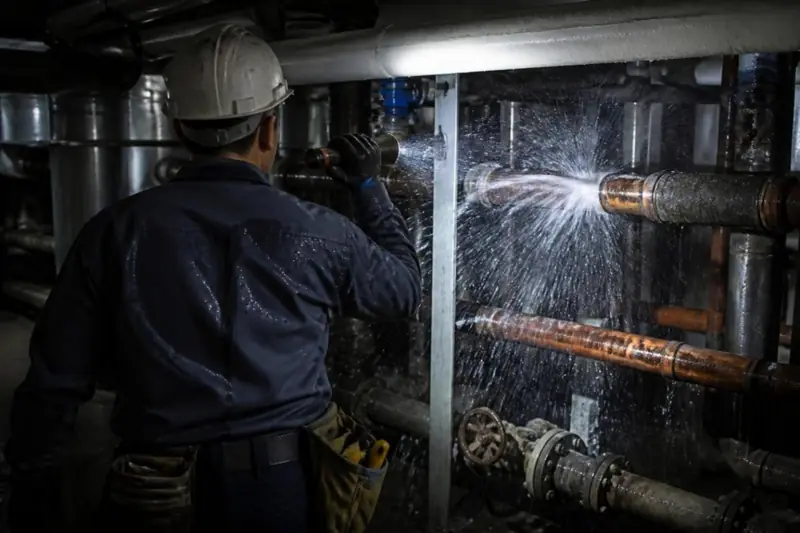
A commercial kitchen needs hot water for dish machines, three-compartment sinks and handwashing, all at once during a rush. An apartment building may run a bank of water heaters or a boiler serving dozens of units. When hot water fails, a restaurant can't legally serve, and tenants call the office within minutes.
Commercial water heaters differ from residential ones in input rating, recovery rate, venting and code requirements. Replacing one is a permitted job that often involves gas piping, venting and sometimes electrical changes.
What's included
- Repair of commercial gas and electric tank water heaters
- Tankless water heater installation and descaling
- Replacement and right-sizing of water heaters
- Boiler and indirect water heater service
- Recirculation pump and mixing valve repair
- Expansion tank and relief valve replacement
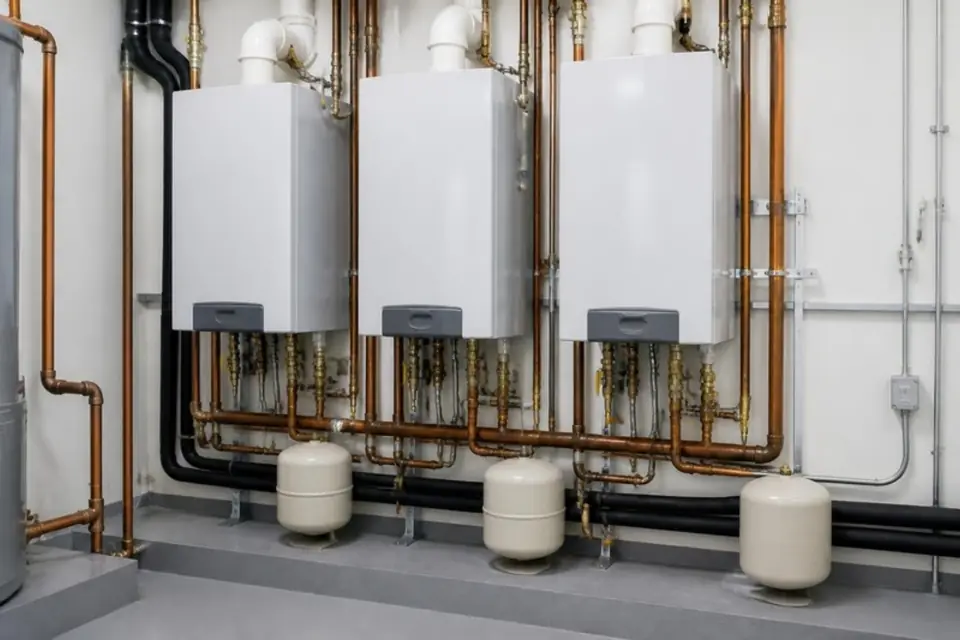
- Multi-unit water heater banks for apartment buildings
- Permitting and inspection for replacements
Your water heater needs attention if
- Hot water runs out during peak hours
- Water is rusty, discolored or smells like sulfur
- The tank rumbles or pops (sediment buildup)
- There's water around the base of the tank
- The unit is more than 10 years old and needs repeated repairs
Water heaters and Austin water
Austin's water is moderately hard: 70 to 126 ppm in Austin Water's 2025 report. Round Rock and parts of Georgetown are very hard. See our water hardness guide. Calcium and magnesium scale builds up inside tanks and tankless heat exchangers, cutting efficiency and shortening equipment life. Commercial tank heaters should be flushed regularly, and tankless units descaled on a schedule. Water softening or scale treatment is worth considering for high-use kitchens and laundries.
In the City of Austin, plumbing change-outs and repairs are permitted through Development Services, which enforces the 2024 Uniform Plumbing Code with local amendments. Gas units also have venting and combustion-air requirements. Your licensed plumber confirms and pulls the permit for the job.
Sizing a commercial water heater
Commercial water heaters are sized by how much hot water the building uses at its busiest hour, not by tank size alone. Three numbers matter:
- Recovery rate: how many gallons per hour the heater can bring up to temperature. A kitchen that runs out of hot water mid-rush usually has a recovery problem, not a tank-size problem.
- Input rating: the burner size in BTU per hour for gas units, or kilowatts for electric. Higher input means faster recovery, but also larger gas piping and venting.
- First-hour delivery: the usable hot water in the tank plus what the heater recovers in the first hour of heavy use. It's the fairest way to compare a large tank with a smaller, faster one.
High-temperature dish machines usually need a booster heater, because the final rinse has to be hotter than the water the building supplies. The machine's data plate lists the temperature it needs. Ask the plumber to size from a fixture count and your real peak, not from the old unit's label.
Tankless water heater installation for commercial buildings
Tankless water heaters heat water on demand instead of keeping a tank hot, so they save space and standby energy. In a commercial building they are usually installed as a rack of two or more units, sized to the peak flow of the fixtures they serve. A single residential-size unit can't keep up with a dish machine or a row of showers.
Before a tankless installation, the plumber checks gas line size and pressure, venting, water quality and the electrical supply. Austin's hard water makes scale the main enemy of tankless heat exchangers, so plan for a softener or regular descaling. Switching from a tank to tankless is a permitted job and often needs a larger gas line.
Commercial boiler repair and service
Larger buildings often make hot water with a boiler and an indirect storage tank rather than standalone water heaters. Boiler problems show up as long recovery times, short cycling, pressure relief valves that discharge, or a building that runs out of hot water at peak.
Boiler work covers burners and controls, circulating pumps, mixing valves, expansion tanks and the indirect tank itself. Some boiler work in Texas falls under separate state boiler rules. Mention the boiler type and size when you request service, so the right contractor is matched to it.
Water heater repair or replacement?
Water heater repair makes sense when the tank is sound and the failure is a part. Replacement makes sense when the tank itself has failed or the system can't keep up.
| Situation | Usually | Why |
|---|---|---|
| Thermocouple, igniter, gas valve, element or thermostat failed | Repair | Single parts; usually one visit |
| Relief valve or circulating pump failed | Repair | Replaceable without touching the tank |
| Water leaking from the tank body | Replace | A leaking tank can't be repaired |
| Hot water runs out at peak every day | Resize or replace | The system is too small for the real demand |
| Near or past expected life, with repeated repairs | Replace | Planned replacement avoids an emergency one |
For apartment buildings with several units, replacing the oldest heaters on a schedule avoids emergency replacements during the cold months, when demand is highest.
How it works
Diagnose
The plumber checks burners or elements, controls, venting, relief valve and tank condition.
Repair or replace?
You get a straight recommendation based on age, condition and repair cost.
Size it right
For replacements, peak demand is calculated so the new system keeps up.
Install and inspect
The unit is installed to code, permitted, tested and explained to your staff.
What does commercial water heater service cost in Austin?
Costs depend on capacity, fuel type, venting and access (rooftop and basement installs cost more). For the 2026 federal efficiency rule, permits and rebates, see our commercial water heater replacement cost guide.
| Service | Typical range |
|---|---|
| Diagnostic / repair visit | $175 – $600 |
| Tankless descaling service | $200 – $450 |
| Commercial tank water heater replaced | $4,000 – $15,000+ |
| Commercial tankless system installed | $5,000 – $20,000+ |
Planning estimates, not quotes (2026). Final price depends on size, access and parts. Your plumber confirms it before work starts. How we estimate
Get a free quoteSee all commercial plumbing costs
Property types we match plumbers for
Water Heaters FAQ
How long does a commercial water heater last?
DOE's 2023 efficiency rule uses an average of about 10 years for commercial gas storage water heaters and 17 years for tankless units. Heavy use and hard water can shorten that, and regular flushing and anode rod checks help. See our water heater replacement cost guide.
Is tankless better for a restaurant?
It can be. Multiple tankless units in a rack deliver continuous hot water and save space. But they need adequate gas supply and regular descaling in hard water. The right choice depends on your peak demand and building.
Can you replace a water heater without closing my business?
Often yes. Replacements are commonly scheduled overnight or early morning, and some setups allow a temporary unit to be connected.
Why do I run out of hot water during rush hour?
The system is undersized for peak demand, sediment has reduced capacity, or a burner or element is failing. A plumber can test recovery rate and compare it to your actual use.
Still have questions?
Licensing, permits, pricing and emergencies are covered in the full FAQ.
Related guides
- Is Austin Water Hard? What the 2025 Numbers Mean for Commercial Buildings
- How Much Does Commercial Water Heater Replacement Cost in Austin? (2026)