Key takeaways
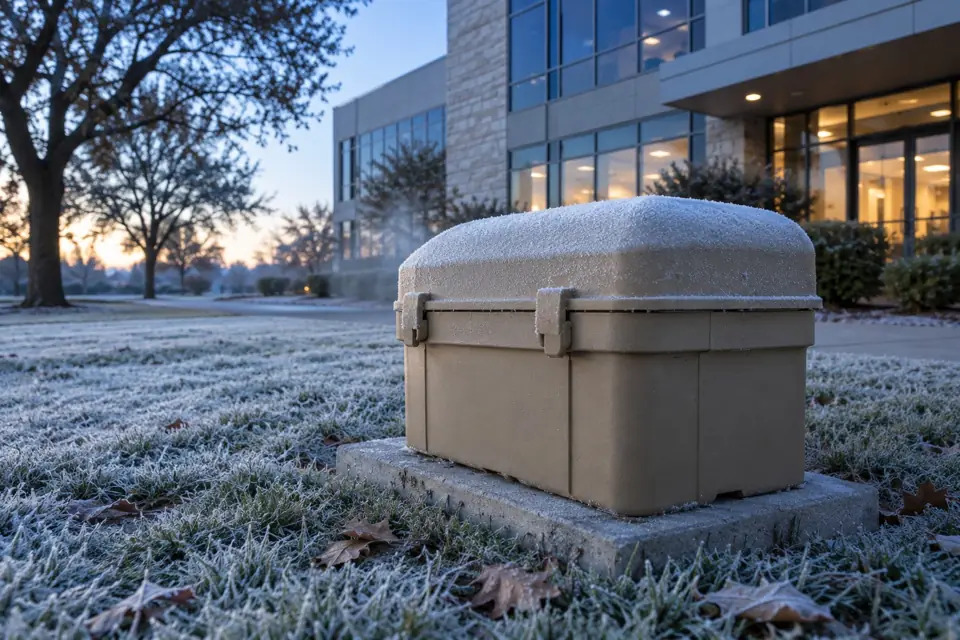
- Insulate exposed pipes and backflow assemblies, and drain irrigation, before freeze season (October to November).
- Keep vacant suites heated during a freeze. A cold, empty suite is a common place for pipes to split.
- Leaks often show up only once frozen pipes thaw, so walk the building as soon as temperatures rise.
- An outdoor backflow assembly damaged by a freeze has to be repaired or replaced, then tested again.
Freeze-proofing is the set of steps that keep a building's water lines from freezing, or empty them before they can. Central Texas doesn't freeze often, so many buildings aren't built for long cold spells. Some older Austin commercial buildings can have water lines in exterior walls, attics, parking garages and rooftop mechanical areas that were never designed for long periods below freezing. The February 2021 winter storm showed how quickly one hard freeze can flood offices, restaurants and apartment buildings across the city. At Camp Mabry the low fell to 7°F on February 16, and the temperature stayed below 33°F for 144 straight hours, a record (National Weather Service).
This checklist is built for the people responsible for commercial buildings: property and facility managers, restaurant owners and HOA boards. It's organized by timing, because the most useful work happens before the forecast turns cold.
| Phase | Key actions | Source |
|---|---|---|
| Before freeze season (Oct–Nov) | Insulate exposed pipes and backflow assemblies, label and test shutoffs, get a meter key | City winter guidance, Austin Water |
| 48 hours before a hard freeze | Drain irrigation, disconnect hoses, keep heat on in every suite | Austin Water |
| During the freeze | Drip one faucet on the most exposed line, check the building daily, thaw only with gentle heat | Austin Water, City winter guidance |
| After the thaw | Walk the building, check backflow assemblies, read the meter for hidden leaks | City Code §15-1-12 for retests |
Why commercial buildings in Austin are at risk
A burst pipe is a pipe split open by ice. Pipes burst because water expands as it freezes. The ice builds pressure inside the pipe between the frozen section and a closed valve or fixture, and the pipe splits. It usually doesn't leak until the ice melts, which is why many leaks are found only as temperatures climb back above freezing.
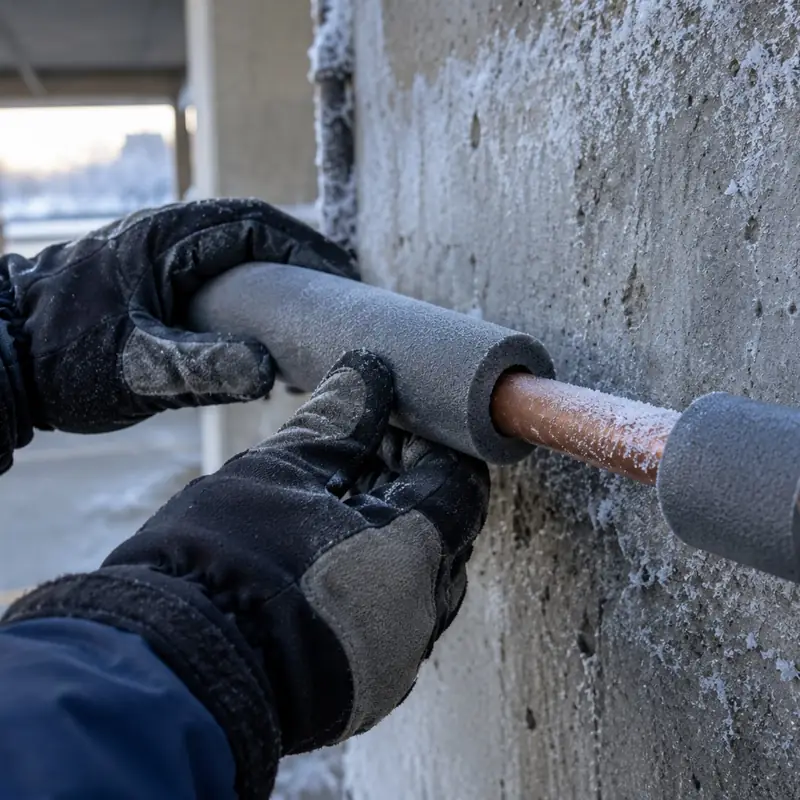
Commercial properties often have more exposed piping than homes. The usual weak points are:
- Backflow prevention assemblies installed above ground, especially uninsulated RPZ assemblies at the street
- Irrigation systems and their backflow devices
- Water lines in parking garages, loading docks and breezeways
- Rooftop equipment, cooling tower makeup lines and exterior hose bibbs
- Pipes in exterior walls of older strip centers and office buildings (see water lines and repiping)
- Vacant suites where the heat has been turned down or off
- Fire sprinkler piping in unheated areas (handled by your fire sprinkler contractor, not a plumber)
Before freeze season (October–November)
- Walk the building and list every exposed water line, backflow assembly, irrigation device and exterior faucet.
- Insulate exposed pipes and install insulated enclosures or covers on above-ground backflow assemblies, as the City's winter guidance advises for exposed pipes. An insulated enclosure is a weatherproof box or blanket that slows heat loss from an outdoor assembly.
- Find and label the building's main water shutoff and any zone shutoffs. Test that they actually turn.
- Make sure you can reach the shutoff in the meter box. Austin Water notes you may need a water meter key, sold at most hardware stores.
- Confirm heat works in mechanical rooms, vacant suites and any space with water lines.
- Ask your fire sprinkler contractor to check dry systems and heat in sprinkler riser rooms.
- Put a licensed plumber's emergency number where night staff and tenants can find it.
48 hours before a hard freeze
- Turn off and drain automatic sprinkler (irrigation) systems, as Austin Water recommends.
- Disconnect hoses from exterior faucets and cover the faucets.
- Keep the heat on in the whole building, including vacant suites, overnight and over the weekend.
- Open cabinet doors under sinks on exterior walls so warm air reaches the pipes.
- Plan to let faucets on exposed lines drip at a trickle during the freeze, which keeps water moving. The City's winter guidance asks people to drip only one faucet if needed, so pick the faucet on the most exposed line.
- Tell tenants and staff what you're doing and who to call if they see water.
- Restaurants: confirm walk-in coolers, ice machines and dish machines have heat around their supply lines.
During the freeze
- Check the building at least once a day if it's closed, especially mechanical rooms and vacant suites.
- If a faucet stops running or slows to a trickle, a pipe may be frozen. Leave the faucet open.
- Never thaw a pipe with an open flame. Austin Water recommends gentle heat such as a hair dryer, heating pad or warm towels.
- If a pipe bursts, shut off the water at the nearest valve or at the main right away, then call the emergency line.
After the thaw
- Walk the whole building as temperatures rise above freezing. Look at ceilings, walls, garages and roofs.
- Check backflow assemblies for cracks. A freeze-damaged assembly has to be repaired or replaced and then retested.
- Read the water meter with everything off. If it keeps moving, there's a hidden leak.
- Restart irrigation only after checking the backflow device and the lines for splits.
- Photograph any damage for insurance before cleanup starts.
What to do if pipes freeze in your building
Take these steps in order:
- Shut off the water to the frozen line, or at the main if you can't isolate it.
- Open a faucet near the frozen section so melting water has somewhere to go.
- Apply gentle heat, never an open flame.
- Once water flows again, check the pipe closely for splits.
If you can't find the frozen section, the line is inside a wall or ceiling, or water is already leaking, call a licensed plumber. Our emergency commercial plumbing line connects you with plumbers across Austin, and leak detection can find splits that haven't started leaking yet.
Backflow assemblies need extra attention
Above-ground backflow assemblies sit outside on the water service, the irrigation line or the fire line, so they're among the first parts of a building to freeze. A freeze can crack the body or damage internal parts.
A repaired assembly must be retested immediately after the repair (Austin City Code §15-1-12), a replacement is tested when it's installed (30 TAC §290.44(h)), and Austin Water requires the results to be reported. If freeze damage is likely, schedule backflow testing and repair as soon as the weather clears. See our guide What Is Backflow Testing? for how testing works.
Build freeze prep into your maintenance plan
The cheapest freeze damage is the damage that never happens. A preventive maintenance plan can add an autumn walk-through: insulation checks, shutoff tests, backflow enclosure checks and irrigation winterizing, done in October before the first cold front.
Example: freeze plan for an office building with a vacant suite
A property manager with a vacant suite on an exterior wall keeps that suite heated through the freeze. The manager opens the cabinet doors under its sinks and drips the faucet on the line that runs along the outside wall.
After the thaw, the manager checks that suite first, then the irrigation backflow assembly and any rooftop lines. A cracked assembly gets repaired and retested before the result is reported. A burst line is shut off at the nearest valve first, then repaired. Photos of any damage go to the insurer before cleanup starts.
Related services
Who this guide is for
Frequently asked questions
When are pipes in Austin buildings most at risk of freezing?
Water freezes at 32°F. The longer temperatures stay below freezing, the higher the risk for exposed pipes. Pipes inside heated spaces rarely freeze. The risk is in unheated garages, attics, exterior walls, vacant suites and outdoor equipment such as backflow assemblies.
Should I drip faucets in a commercial building during a freeze?
Only on faucets served by exposed or vulnerable lines. Austin Water recommends letting faucets drip at a trickle during freezing weather to keep water moving, and the City's winter guidance asks people to drip only one faucet if needed. In a fully heated building, you don't need to drip at all.
Should I turn the heat off in a vacant suite to save money in winter?
Not during a freeze. Vacant suites are high-risk, because the heat is often turned down and nobody notices until water comes through the ceiling of the suite below. Keep the heat on and check the space during cold snaps.
Who handles frozen fire sprinkler pipes?
Your fire sprinkler contractor. Sprinkler systems are serviced by licensed fire sprinkler contractors, so call yours first rather than draining or altering the system. Also notify your fire alarm monitoring company if a sprinkler line freezes or breaks.
Does a burst backflow preventer need to be retested after repair?
Yes. In Austin, City Code §15-1-12 requires a repaired assembly to be retested by a tester immediately after the repair. A replacement is tested when it's installed. The results are reported to Austin Water.
Methodology: how this checklist was put together
This checklist is our editorial team's synthesis of the cold-weather guidance published by Austin Water and the City of Austin, linked under Sources, organized by timing for commercial buildings. It follows our editorial policy.
It is general guidance, not an engineering assessment. Buildings with fire sprinklers, chillers or rooftop equipment need their own plan from a licensed contractor.