Key takeaways
- A commercial tank water heater replacement typically runs about $4,000 to $15,000 or more, and a tankless system about $5,000 to $20,000 or more (2026 estimates).
- Federal rules treat a gas storage water heater as commercial equipment above 75,000 Btu/h, and an electric one above 12 kW.
- DOE's new standard applies from October 6, 2026. DOE won't seek penalties for gas units made before October 6, 2027.
- DOE's analysis uses an average lifetime of 10 years for commercial gas storage water heaters and 17 years for tankless units.
- Austin Energy offers businesses $1,000 per qualifying heat pump water heater.
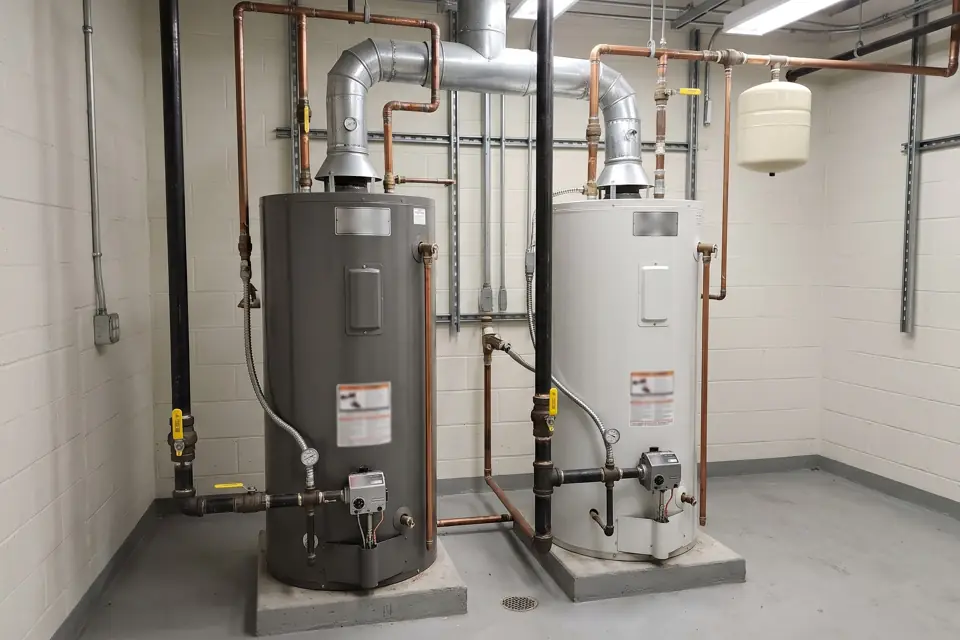
A commercial water heater is one whose rated input is above the federal line for home units. For a gas storage heater, that's more than 75,000 Btu/h; for an electric one, more than 12 kW (10 CFR 431.102). Restaurants, salons, gyms, laundries and apartment buildings often run commercial units, because they need more hot water, faster, than a residential heater can supply.
Replacing one costs more than a home water heater. The equipment is bigger. The venting and the gas or electrical service must match it. And the swap often happens overnight, so the business keeps hot water. The ranges below are general Austin-area estimates for 2026, prepared for budgeting. They are not quotes.
| Service | Typical range |
|---|---|
| Diagnostic / repair visit | $175 – $600 |
| Commercial tank water heater replaced | $4,000 – $15,000+ |
| Commercial tankless system installed | $5,000 – $20,000+ |
| Tankless descaling service | $200 – $450 |
Planning estimates, not quotes (2026). Final price depends on size, access and parts. Your plumber confirms it before work starts. How we estimate
Get a free quoteCommercial water heater cost by type
The wide ranges above cover very different equipment. These rough planning tiers narrow them down by type. All are editorial estimates for a typical single-unit replacement with normal access:
| Type | Typical installed range |
|---|---|
| Commercial electric tank | $4,000 – $9,000 |
| Commercial gas tank, standard venting | $5,000 – $10,000 |
| Commercial condensing gas tank (new venting and condensate drain) | $8,000 – $15,000+ |
| Commercial heat pump water heater (before rebate) | $6,000 – $15,000+ |
| Single commercial tankless unit | $5,000 – $9,000 |
| Multi-unit tankless rack | $8,000 – $20,000+ |
For a heat pump water heater, Austin Energy's $1,000 rebate per qualifying unit, with a 30% bonus for eligible small businesses, comes off that cost. The rebate depends on the unit qualifying.
What makes a water heater commercial?
Federal rules draw the line by input rating, not by building type. Under 10 CFR 431.102, commercial equipment includes:
- Gas-fired storage water heaters rated above 75,000 Btu/h (and below 4,000 Btu/h per gallon of stored water).
- Electric storage and instantaneous water heaters rated above 12 kW.
- Gas-fired instantaneous (tankless) water heaters rated above 200,000 Btu/h.
A business can run residential-size units, and many small offices do. This guide prices commercial-rated equipment. It's heavier, has a higher input and often serves many fixtures at once.
What changes the price of a commercial water heater replacement
Type and fuel. Gas and electric tanks, tankless systems and heat pump units all price differently. Switching type usually costs more than a like-for-like swap. The gas line, electrical service or venting may need changes.
Venting and condensate. High-efficiency condensing gas units vent differently from older atmospheric units and produce condensate that needs a drain. DOE's rule lists condensate removal and vent replacement among the installation costs of the new standard.
Size and recovery. A unit sized for the peak (a dinner rush, a morning shower load in a gym) costs more than one sized for average use. Undersizing is cheaper up front and costs more in complaints.
Access. A unit in a ground-floor mechanical room is the easy case. A rooftop, mezzanine or tight closet adds labor and sometimes lifting equipment.
Permit and inspection. A change-out permit and inspection are part of the job (see the permit section below).
After-hours work. Restaurants and gyms often want the swap overnight so they open with hot water. That costs more than a weekday daytime job.
Water quality. Austin's water is moderately hard, 70 to 126 ppm in Austin Water's 2025 water quality report, so scale builds up in tanks and tankless heat exchangers. See our water hardness guide for what that means for equipment.
The 2026 federal efficiency rule and what it means for cost
In October 2023, DOE adopted new efficiency standards for commercial water heating equipment (88 FR 69686). Compliance is required on and after October 6, 2026. Under that rule, the minimum thermal efficiency for commercial gas storage water heaters rises to 95%. Thermal efficiency is the share of the fuel's heat that ends up in the water. A condensing water heater is one that pulls extra heat out of its exhaust gases, which is how it reaches that level.
In April 2026, DOE announced an enforcement policy. It won't seek civil penalties over those efficiency standards for gas-fired storage and tankless units made from October 6, 2026, up to October 6, 2027.
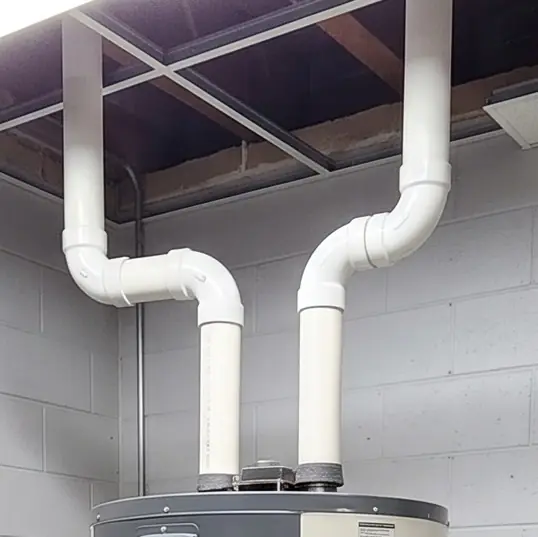
For a building owner, the effect shows up in the quote. A condensing gas unit can need new venting and a condensate drain, and that adds cost. Ask your plumber which model is quoted and whether it's condensing. Ask whether venting and drain work are included.
Do you need a permit to replace a commercial water heater in Austin?
Yes, plan on one. Austin's Development Services Department issues stand-alone trade permits for plumbing work on commercial and single-family properties, including a Plumbing and Mechanical: Change Out permit. Your licensed plumber normally applies for it and schedules the inspection.
Once a permit is active, it expires on the 181st day if no inspection has been scheduled or received (Development Services). A passing inspection extends it.
How long does a commercial water heater last?
DOE's 2023 rule uses these average lifetimes in its analysis (Table IV.21):
Those are averages, not promises. In the same rulemaking, the water heater industry group AHRI commented that higher water temperatures and faster duty cycles decrease expected lifetimes in commercial use. A restaurant tank running hot all day may not reach the average. Regular flushing or descaling helps, especially on Austin's moderately hard water.
Repair or replace?
A plumber's diagnostic visit usually settles it. As a rule of thumb:
- Repair a younger unit with a failed part, such as a thermostat, element, igniter or gas valve.
- Replace a unit with a leaking tank, which usually can't be repaired.
- Replace a unit near or past the DOE average lifetime that needs a major repair.
- Replace a unit that can't keep up with demand, so you can size the new one properly.
Rebates that lower the cost
Austin Energy offers business customers $1,000 per qualifying heat pump water heater, for retrofits and new construction. A 30% bonus is available for eligible locally owned small businesses, small nonprofits and houses of worship. Check the program rules before you buy, because the equipment has to qualify.
How to keep the cost down
Replace before it fails. A planned swap on a weekday costs less than an emergency replacement at night, and it lets you compare quotes.
Size it to real demand. Give the plumber your peak use, such as seats, showers or wash cycles, so you don't pay for capacity you don't need.
Get the full scope in writing. Make sure the quote includes the permit, venting, condensate drain, haul-away and any gas or electrical changes.
Maintain it. Annual flushing or descaling protects the new unit. A preventive maintenance plan can put it on a schedule, along with the rest of the maintenance checklist.
Example: replacing a restaurant's gas water heater
Take an illustrative case. A restaurant's commercial gas tank water heater starts leaking from the tank. Because a leaking tank usually can't be repaired, the plumber quotes a replacement. A like-for-like commercial tank falls in the $4,000 to $15,000 or more range, depending on size and access.
If the replacement is a condensing model, the quote may add new venting and a condensate drain. If the swap is done overnight so the kitchen opens with hot water, after-hours labor adds to the total. The plumber pulls the change-out permit and schedules the inspection. For water heater service in Austin, see commercial water heaters.
Related services
Who this guide is for
Frequently asked questions
How much does a commercial water heater cost in Austin?
Installed, a commercial tank water heater typically runs about $4,000 to $15,000 or more, and a commercial tankless system about $5,000 to $20,000 or more. These are general estimates, not quotes. Size, fuel, venting and access set the final price.
What's the difference between a commercial and a residential water heater?
The input rating. Under 10 CFR 431.102, a gas storage water heater above 75,000 Btu/h, an electric one above 12 kW, or a gas tankless unit above 200,000 Btu/h is commercial equipment. Commercial units heat more water, faster.
How many years should a commercial water heater last?
DOE's analysis uses an average of 10 years for commercial gas storage water heaters, 17 years for tankless units and 25 years for circulating water heaters and hot water supply boilers. Heavy daily use can shorten that.
Is a permit required for a commercial water heater change-out in Austin?
Plan on one. Austin Development Services issues a stand-alone Plumbing and Mechanical: Change Out trade permit for commercial properties, and the work is inspected. Your licensed plumber normally pulls the permit.
Will the new DOE rule force me to buy a condensing water heater?
For commercial gas units, the new standard applies from October 6, 2026, and requires efficiency levels reached by condensing designs. DOE has said it won't seek penalties for gas units made before October 6, 2027, so availability of older designs may vary. Ask your plumber what's in stock.
Estimate methodology
These ranges are planning estimates prepared by our editorial team for typical commercial water heater work in the Austin area in 2026, following our editorial policy. They are editorial judgments, not survey data or collected quotes.
Each range assumes a single unit, normal access and business-hours work. The ranges don't include gas line or electrical service upgrades, structural work, after-hours labor or rebates. Federal rule details and lifetimes come from DOE's 2023 final rule and its April 2026 enforcement policy, linked under Sources.
Sources
- 10 CFR 431.102 (commercial water heater definitions), via Cornell LII
- DOE final rule: Energy Conservation Standards for Commercial Water Heating Equipment, 88 FR 69686 (2023)
- DOE: Commercial Water Heater Enforcement Policy (April 2026)
- City of Austin Development Services: Apply for a Standalone Permit
- Austin Energy: Commercial Heat Pump Water Heater Rebate
- Austin Water: Water Quality Reports (2025 hardness)