Key takeaways
- Austin Water reported total hardness of 70 to 126 ppm (4.1 to 7.4 gpg) in 2025, averaging 93 ppm (5.4 gpg).
- That's moderately hard on the U.S. Department of the Interior and Water Quality Association scale. Round Rock's 2025 average (258 ppm) and parts of Georgetown are very hard.
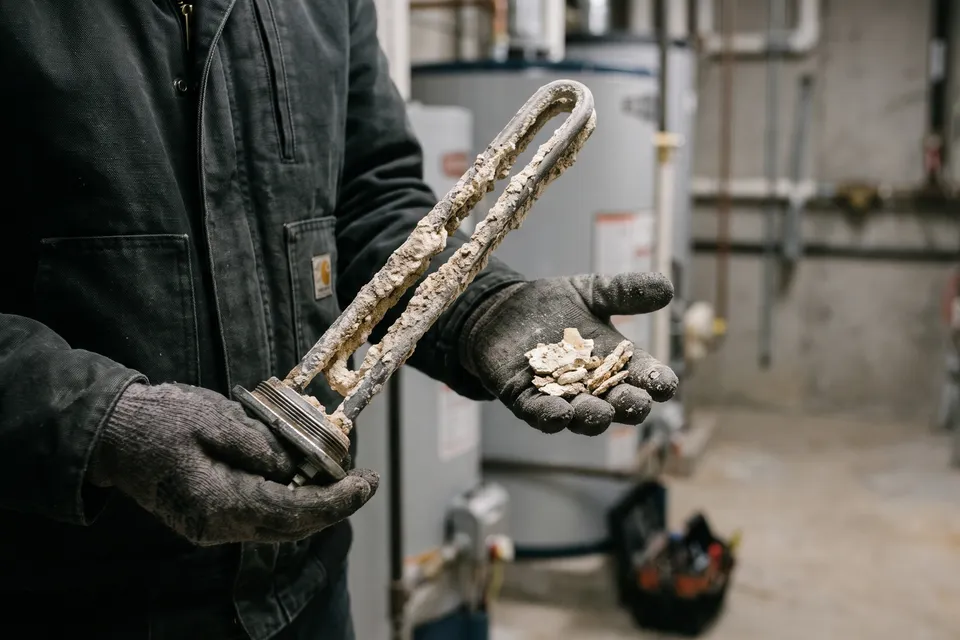
- Hard water isn't a health risk, but it leaves mineral buildup in water heaters, fixtures and appliances.
- Whether a business needs a softener depends on its equipment's water specs, not the city average.
- In Texas, engaging in water treatment requires a TCEQ certificate. Plumbers licensed under Chapter 1301 are exempt.
Water hardness is the amount of dissolved calcium and magnesium in water, picked up as it passes through rock. Austin Water measures it every year and publishes the results in its water quality report. Those numbers are the right starting point for any business deciding whether its water heaters, ice machines or dish machines need softening.
This guide gives the official 2025 figures for Austin and two nearby cities. It explains what the numbers mean on the standard hardness scale, and when commercial equipment actually needs treatment. For the equipment most affected, see commercial water heater service.
Austin's 2025 hardness numbers
Austin Water's 2025 Consumer Confidence Report lists total hardness, measured as calcium carbonate:
- Low: 70 ppm (4.1 gpg)
- High: 126 ppm (7.4 gpg)
- Average: 93 ppm (5.4 gpg)
The water comes from the Lower Colorado River as it flows through Lake Travis and Lake Austin. Austin Water's treatment includes lime softening at the plant, and the utility says the process also helps coat pipes and prevent corrosion. The water that reaches buildings is still moderately hard.
A grain per gallon (gpg) is a hardness unit that many softeners, dish machines and equipment manuals use. Austin Water notes that one grain per gallon equals about 17.1 ppm, so divide a ppm figure by 17.1 to get gpg.
Where Austin's water falls on the hardness scale
Water hardness is classified by the U.S. Department of the Interior and the Water Quality Association, as summarized in the University of Nebraska-Lincoln's NebGuide G2275. On that scale, Austin's 2025 average of 93 ppm is moderately hard. The high reading of 126 ppm sits just inside the hard band, and the low of 70 ppm is still moderately hard.
So the short answer is: Austin's water isn't soft, but it isn't very hard either. It's softer than the water in Round Rock and much of Georgetown.
| Class | mg/L (ppm) | Grains per gallon | Where local figures fall |
|---|---|---|---|
| Soft | 0 – 17.1 | 0 – 1 | — |
| Slightly hard | 17.1 – 60 | 1 – 3.5 | — |
| Moderately hard | 60 – 120 | 3.5 – 7.0 | Austin average (93 ppm) |
| Hard | 120 – 180 | 7.0 – 10.5 | Austin high (126 ppm); Georgetown, Lake Georgetown and Southlake plants (176–178) |
| Very hard | 180 and over | 10.5 and over | Round Rock average (258 ppm); Georgetown, Park and Southside plants (309–320) |
Nearby cities have harder water
The chart above compares official figures from three utilities. Round Rock's 2025 water quality report lists hardness from 100 to 358 ppm, with an average of 258 ppm in its data table. The report's text gives 249 mg/L and calls it very hard water. Round Rock draws on Lake Georgetown and the Edwards Aquifer, and limestone formations add calcium and magnesium.
Georgetown Utility Systems reports that hardness varies by treatment plant. The Lake Georgetown and Southlake plants run about 176 to 178 mg/L, which the utility puts at roughly 10 to 11 gpg. The Park and Southside plants run about 309 to 320 mg/L, roughly 19 gpg by the utility's figure. These are historical ranges, not a single year's test. A business in Georgetown should ask which plant serves its address.
Other cities and water districts publish their own reports. A property manager with buildings in several cities should look up each one, because the same water heater is exposed to much harder water in Round Rock than in Austin. Our Round Rock and Georgetown pages cover each city's other plumbing rules.
What hard water does to commercial equipment
Hard water is not a health risk. The problem is what the minerals do inside equipment. The UNL guide lists mineral buildup on plumbing fixtures, including water heaters, film on glassware, and poor soap and detergent performance. Round Rock's report notes deposits on fixtures, dishes and appliances.
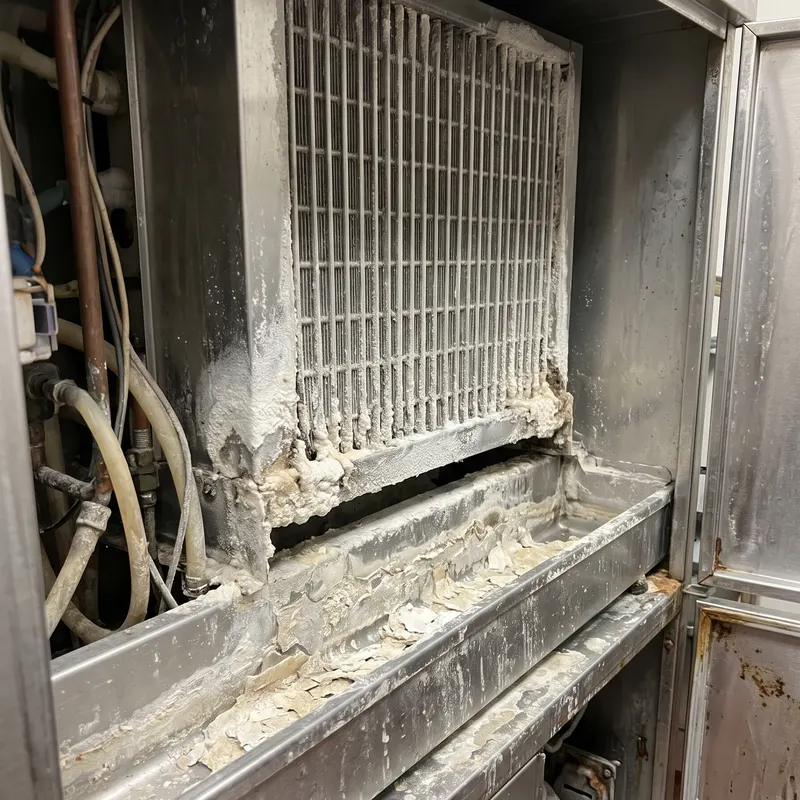
In a commercial building, the equipment that heats water or makes ice usually feels it first:
- Water heaters and boilers. Scale collects where water is heated, so tanks and heat exchangers need flushing or descaling. See commercial water heater service.
- Ice machines. Scale can form where water is frozen and in the water lines.
- Dish machines. Hard water can leave film on glassware and weaken detergent performance.
- Coffee and espresso equipment, steamers and combi ovens. These are heated, high-use and sensitive to scale.
The best guide for each machine is its manual. Check it for a maximum hardness or a water treatment requirement, and compare that with your utility's numbers rather than a general rule of thumb.
Does a business in Austin need a commercial water softener?
It depends on the equipment, not the city average. At 4.1 to 7.4 gpg, some Austin buildings manage with routine descaling. Whether that's enough depends on the equipment spec. A building with large water heaters, boilers or kitchen equipment whose manuals call for softer water may need treatment. Buildings in Round Rock and parts of Georgetown, where water is very hard, need it more often.
A commercial water softener is usually an ion exchange system. A resin bed trades sodium or potassium for the calcium and magnesium in the water, bringing hardness into the soft range. The UNL guide notes this raises the sodium or potassium in the water. Some buildings therefore choose to soften only the hot water or equipment lines and leave drinking-water taps unsoftened.
Salt-free "softeners" are different. UNL describes them as descaling devices: they don't remove the hardness from the water, though they may reduce scale problems. If the goal is actually removing calcium and magnesium, an ion exchange softener or another removal method is needed. Ask any vendor which type it's quoting.
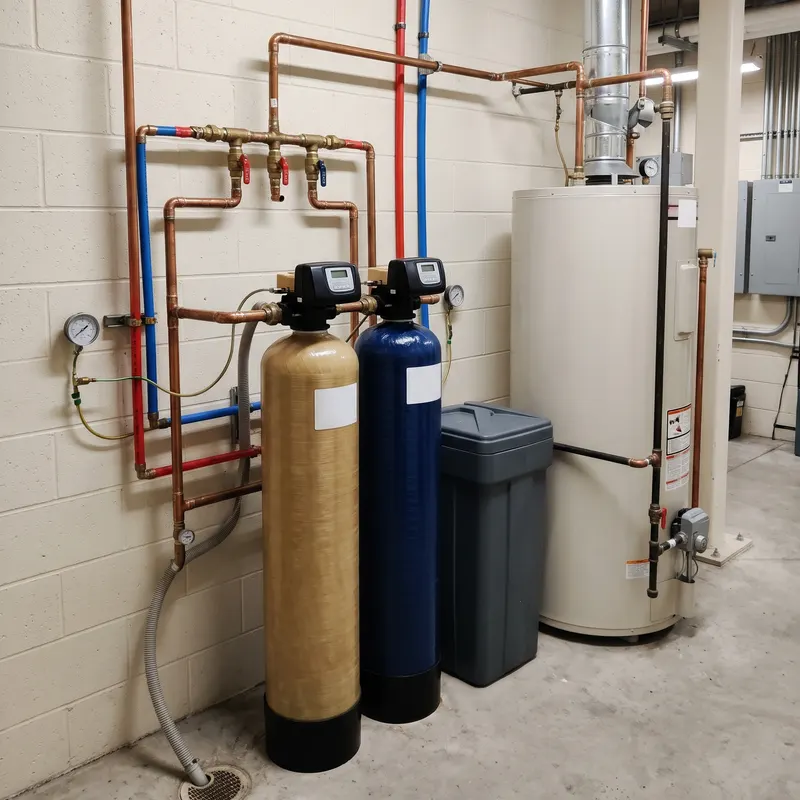
Softener equipment also needs upkeep: salt, resin, and checks on the bypass and drain. If you add one, put it on your preventive maintenance plan next to water heater flushing.
Who can install water treatment equipment in Texas
Texas regulates water treatment as a trade. Under Texas Occupations Code §1904.052, a person may not engage in water treatment without a certificate from the Texas Commission on Environmental Quality. Under §1904.055(a), a person who holds a license under Chapter 1301 (Plumbers) is exempt.
Before water treatment work starts, check the installer's credential: a plumbing license with the Texas State Board of Plumbing Examiners, or a water treatment certificate with TCEQ. Water heater and piping changes around a softener are typically plumbing work, so confirm the scope with a licensed plumber.
How to find your building's hardness
- Look up your utility's annual water quality report. It's often called the Consumer Confidence Report, and it lists hardness in ppm or mg/L. Divide by 17.1 for grains per gallon.
- Ask which treatment plant serves your address if your city has more than one, as Georgetown does.
- Test at the building if equipment specs are strict or the building has its own treatment. Have a plumber or water treatment specialist check hardness at the equipment, after any existing filters.
- Write the number down in your maintenance records, next to each machine's water spec, so service intervals can be set from real figures.
Example: the same restaurant in Austin and in Round Rock
For example, picture the same restaurant opening two locations, one in Austin and one in Round Rock, with identical water heaters, ice machine and dish machine.
In Austin, at 4.1 to 7.4 gpg, the restaurant might rely on a regular water heater flushing and descaling schedule, if its equipment manuals allow that hardness. In Round Rock, where the 2025 average was 258 ppm (about 15 gpg), the same equipment sees about 2.8 times Austin's 2025 average (258 vs. 93 ppm). That location is a stronger candidate for softening the hot water and kitchen equipment lines. Either way, the machine specs decide, and a restaurant plumbing plan should include descaling. Request a quote for water heater or treatment work through the request form.
Related services
Who this guide is for
Frequently asked questions
Is Austin water hard or soft?
Moderately hard. Austin Water's 2025 report lists total hardness of 70 to 126 ppm (4.1 to 7.4 grains per gallon), averaging 93 ppm (5.4 gpg). On the standard scale, 60 to 120 ppm is moderately hard and 120 to 180 ppm is hard.
What is Austin's water hardness in grains per gallon?
About 4.1 to 7.4 gpg in 2025, with an average of 5.4 gpg. Austin Water notes that one grain per gallon equals about 17.1 ppm.
Does Austin Water soften the water?
Austin Water's treatment includes lime softening, and the utility says the process also helps coat pipes and prevent corrosion. The water that reaches buildings is still moderately hard.
Is hard water safe to drink?
Yes. Hard water is not a health risk. Its effects are mineral buildup on fixtures and equipment, film on glassware, and weaker soap and detergent performance.
Do I need a license to install a water softener in Texas?
Engaging in water treatment requires a TCEQ certificate under Texas Occupations Code §1904.052. Under §1904.055(a), a person licensed under Chapter 1301 (Plumbers) is exempt.
Methodology: how this guide was put together
The hardness figures come from each utility's own published data, read on 2026-10-26. The sources are Austin Water's 2025 water quality report, the City of Round Rock's 2025 Consumer Confidence Report and Georgetown Utility Systems' knowledge base. In the text, grains per gallon are the utilities' own figures where they publish one. In the charts, every gpg value is ppm divided by 17.1, using the range midpoint where a utility gives a range, so Georgetown shows 10.4 and 18.4 rather than the utility's rounded 10 to 11 and 19.
Hardness classes come from the U.S. Department of the Interior and Water Quality Association table in UNL Extension's NebGuide G2275. Equipment guidance is general. Each machine's manufacturer specification takes priority, and this guide follows our editorial policy.
Sources
- Austin Water: Water Quality Reports (2025 Consumer Confidence Report)
- City of Round Rock: 2025 Consumer Confidence Report (PDF)
- Georgetown Utility Systems: water hardness by treatment plant
- UNL Extension NebGuide G2275: Salt-Free Water Softener Options (Dec 2025)
- Texas Occupations Code Chapter 1904, §1904.052: certificate required
- Texas Occupations Code Chapter 1904, §1904.055: exemptions