Key takeaways
- Commercial hydro jetting in the Austin area typically runs about $350 to $900 per line. A main line with a camera inspection runs about $600 to $1,500 (estimates).
- The cheapest time to jet a kitchen line is during the grease trap pump-out, about $250 to $600.
- Jetting scours grease and scale off the pipe wall. A cable machine only opens a path through the clog.
- Our starting-point recommendation: jet busy kitchen lines every 3 to 6 months and quieter ones every 6 to 12, then adjust after a camera check.
- Jetting doesn't replace grease trap pumping. Austin requires the trap to be pumped at least every three months.
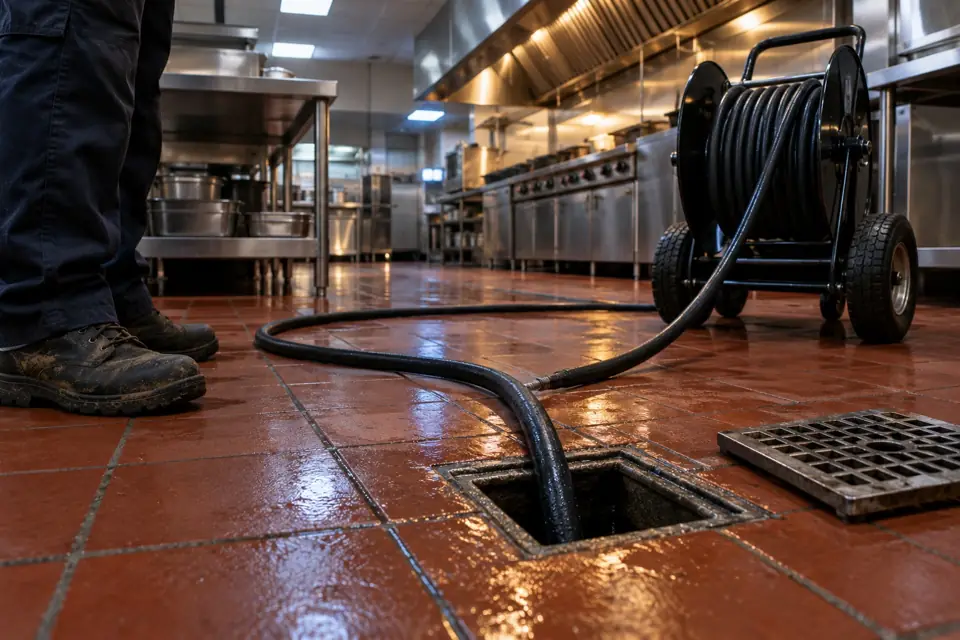
Hydro jetting is a way of cleaning a drain or sewer line with a high-pressure water hose and a nozzle that scours the inside of the pipe. A cable machine is a motorized cable (a snake) that punches a hole through a clog. A jetter removes the grease, scale and roots coating the pipe wall, so the line stays clear for much longer.
Commercial jetting usually costs more than residential work because commercial lines are bigger, longer and greasier, and the work may need after-hours scheduling (not included in these ranges). The ranges below are general Austin-area estimates for 2026, prepared for budgeting. They are not quotes.
| Service | Typical range |
|---|---|
| Drain cable clearing (single line, for comparison) | $175 – $400 |
| Hydro jetting (per line) | $350 – $900 |
| Main line jetting with camera inspection | $600 – $1,500 |
| Kitchen line jetting timed with a pump-out (pumping billed separately) | $250 – $600 |
| Scheduled maintenance jetting | Quoted per visit or per year |
Planning estimates, not quotes (2026). Final price depends on size, access and parts. Your plumber confirms it before work starts. How we estimate
Get a free quoteWhat changes the price of hydro jetting
Line size and length. A 2-inch kitchen branch is a short job. A 4- or 6-inch main line running the length of a strip center takes longer, more water and a bigger jetter.
What's in the pipe. Soft grease clears quickly. Hardened grease, scale in old cast iron, and root masses need more passes and sometimes a cutting nozzle.
Access. A clean, reachable cleanout keeps the price down. Jetting from a roof vent, pulling a toilet or working through a ceiling adds time. Adding a cleanout can lower the cost of every later visit.
Camera inspection. A camera before jetting shows what's in the line. A camera after confirms it's clean and catches breaks or bellies that jetting can't fix. Main line jobs usually include both.
After-hours work. Restaurants usually want jetting before opening or after close, and medical offices around patient hours. Overnight and weekend work costs more.
One-off vs. scheduled. An emergency callout to clear a backup costs more than the same work on a maintenance schedule.
Is hydro jetting worth it over snaking?
For a one-time clog in a small line, a cable machine is cheaper. For a line that clogs again and again, jetting is usually cheaper over a year. It removes the buildup that causes the clogs instead of punching a hole through it. Kitchen lines are the classic case: the same line snaked every month costs more than one jetting every few months (see the example below).
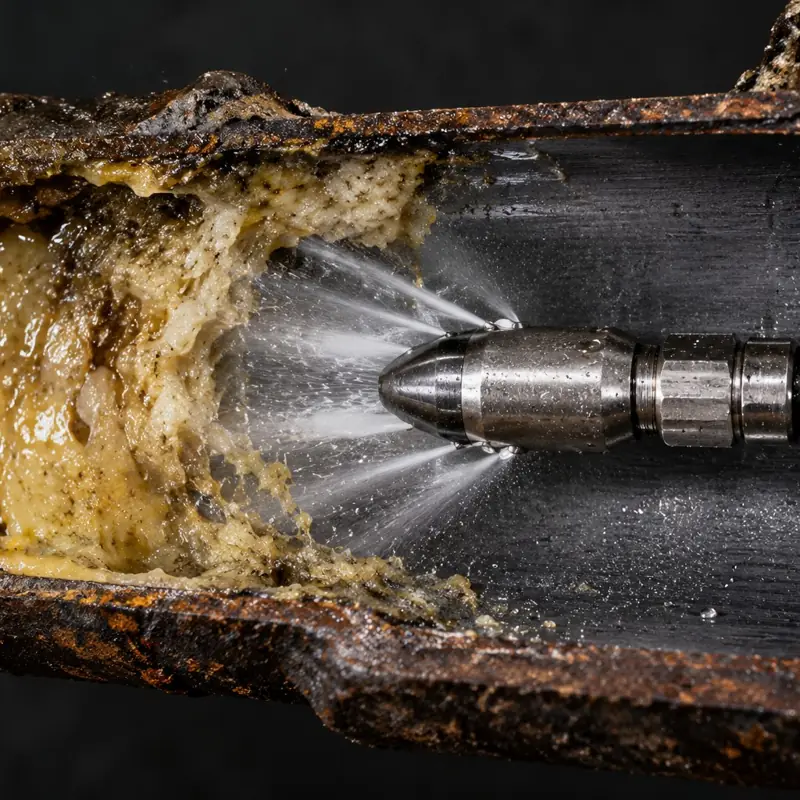
Jetting isn't the right tool for a broken, collapsed or badly sagging pipe. High-pressure water can't fix a structural problem, and it can make a fragile line worse. That's why main line jetting starts with a camera. If the camera finds damage, see sewer line repair and our sewer line replacement cost guide.
Hydro jetting for Austin restaurants
Grease is the main reason restaurant kitchen lines clog. Nationally, an EPA fact sheet citing EPA's 2004 Report to Congress says grease is the most common cause (47%) of reported blockages. A trap that's too small for the kitchen fills faster, so check the size with the grease trap size calculator, which follows Austin Water's sizing criteria. In the City of Austin, a permitted liquid waste hauler must empty and clean the grease trap at least every three months (Austin Water pretreatment FAQ). It must be done sooner when grease and solids reach 50% of the wetted height in the final compartment (same FAQ). Austin Water notes that, under City Code §15-10-165(B), manifest records must be retained for up to three years.
The trap only catches grease that reaches it. The line between the fixtures and the trap, and the line after it, still coat up over time. Time each kitchen line jetting with the grease trap pump-out (intervals are in the next section). Jet first, then pump: the loosened grease goes into the trap and out with the hauler. See grease trap cleaning and the compliance calendar to keep both on schedule.
How often should commercial lines be jetted?
There's no single rule for jetting lines, unlike the grease trap itself, which must be pumped at least every three months in Austin. It depends on how fast the line coats up. Our recommended starting point is every 3 to 6 months for a busy restaurant kitchen line. Use every 6 to 12 months for a quieter kitchen or a high-use restroom group. For an apartment building's main stacks, jet once a year or after any backup. A camera inspection after the first jetting shows how quickly buildup returns and sets the right interval. See drain cleaning and hydro jetting and preventive maintenance plans.
How to keep jetting costs down
Put it on a schedule. Planned jetting costs less than emergency callouts and avoids lost service. Coordinate with the grease trap pump-out so one visit handles both. Add cleanouts where the plumber has to pull fixtures to reach the line. Keep the camera video from the first visit, so later quotes are based on the same measured line. If you manage several properties, request a quote and list every address so the work can be routed together.
Hydro jetting cost for a kitchen sink line vs. a sewer line
A kitchen sink or floor drain line is a short, small branch line. It usually falls toward the low end of the per-line range: about $350 to $600, or $250 to $600 when it's done during a grease trap pump-out. See commercial drain cleaning and hydro jetting.
A sewer main is the larger line that carries the whole building's waste to the City's sewer. Jetting it with a camera inspection typically runs $600 to $1,500. The higher price pays for a bigger jetter, a longer hose run and a video record of the line's condition. If the camera shows a broken line, see the sewer line replacement cost guide.
Example: a year of kitchen line jetting for one restaurant
For example, a busy Austin restaurant that jets its main kitchen line four times a year, each time during a grease trap pump-out, would budget about $1,000 to $2,400 a year at $250 to $600 per visit. That's on top of the grease trap pumping itself.
Without a schedule, the same line might clog a few times a year and need cable clearing at $175 to $400 a call. That looks cheaper on paper. A line that needs clearing every month, though, runs about $2,100 to $4,800 a year at those prices. Clogs often hit during service and can bring after-hours fees. They also leave the grease on the pipe wall. Scheduled jetting is planned around closing time.
Related services
- Drain Cleaning & Hydro Jetting
- Grease Trap Cleaning & Installation
- Sewer Line Repair & Camera Inspection
Who this guide is for
Frequently asked questions
How much does hydro jetting cost in Austin?
Typically about $350 to $900 per line for commercial work, and about $600 to $1,500 for a main line with a camera inspection. Kitchen line jetting done with a grease trap pump-out typically runs about $250 to $600. These are general estimates, not quotes.
Is hydro jetting better than snaking a drain?
For a line that clogs repeatedly, usually yes. A snake punches through the clog. A jetter scours grease, scale and roots off the pipe wall, so the line stays clear longer. For a one-time clog in a small line, snaking is cheaper.
Can hydro jetting damage pipes?
It can make an already broken, collapsed or badly deteriorated pipe worse. That's why main line jetting starts with a camera inspection. On a sound line, the plumber sets the jetting pressure for the pipe's material and condition.
How often should a restaurant jet its kitchen lines?
As a starting point, busy kitchens jet the main kitchen line every 3 to 6 months, and quieter ones every 6 to 12, depending on menu, volume and how well the grease trap is maintained. A camera after the first jetting shows how fast grease returns.
Does hydro jetting replace grease trap pumping?
No. In the City of Austin the grease trap must still be emptied and cleaned by a permitted hauler at least every three months, or sooner under the 50% rule. Jetting cleans the lines. Pumping empties the trap.
Estimate methodology
These ranges are planning estimates prepared by our editorial team for typical commercial jetting jobs in the Austin area in 2026, following our editorial policy. They are editorial judgments, not survey data or collected quotes.
Each range assumes business-hours access to a cleanout, a single line and no excavation. The ranges don't include after-hours or emergency fees, roof or ceiling access, written camera reports beyond a basic recording, or repairs found during the job. Use them as a budget check, not a quote. The contractor prices the job after seeing the line.