Key takeaways
- Trenchless replacement typically runs about $150 to $350 per foot in the Austin area (2026 estimate). Spot repairs and camera inspections are priced in the table below.
- In Austin, the private lateral between the building and the City's sewer main is the owner's responsibility (City Code Chapter 15-11).
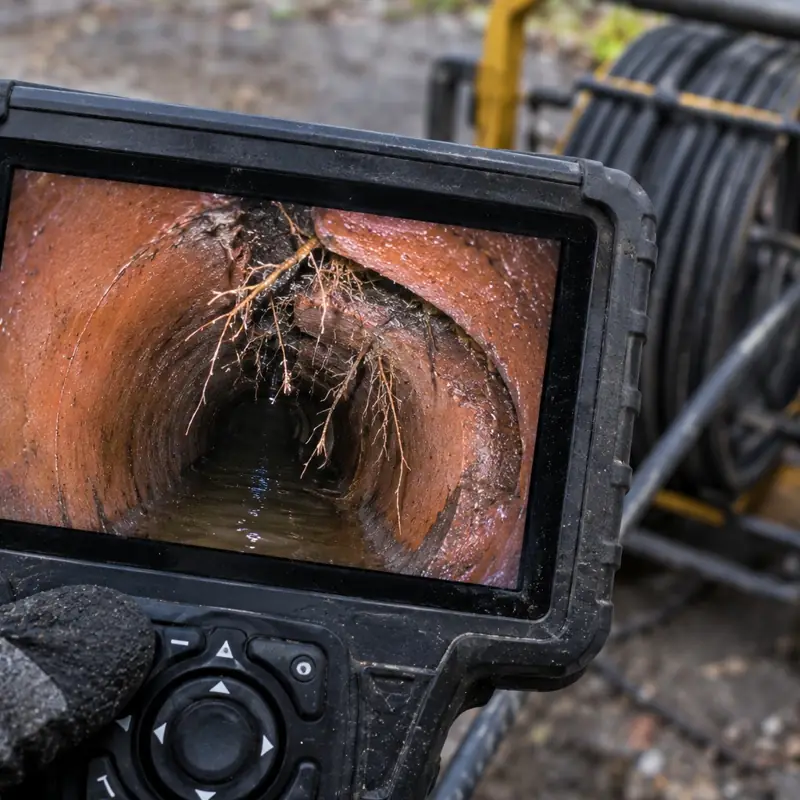
- The camera inspection comes first. It sets the length, depth and method, and so the price.
- Budget separately for restoring concrete or asphalt, which is priced by area.
- Commercial sewer service lines need a City of Austin plumbing permit and inspection.
The sewer line between a commercial building and the City's main (Austin Water calls it the private lateral) belongs to the property owner. Under Austin City Code Chapter 15-11, the owner has to clear blockages and repair defects that let sewage out or let groundwater and debris in. When that line fails, replacing it is one of the larger plumbing bills a building will see.
Many national cost guides focus on residential prices, such as a 4-inch line under a front yard. Many commercial laterals are 6 inches or larger, run under parking lots, sidewalks or slabs, and serve tenants who can't shut down for a week. The ranges below are general Austin-area estimates for 2026, prepared for budgeting. They are not quotes.
| Service | Typical range |
|---|---|
| Sewer camera inspection (locates and measures the problem) | $250 – $600 |
| Spot repair of one section (excavated) | $2,500 – $8,000 |
| Trenchless lining or pipe bursting (per foot) | $150 – $350 |
| Example: 60 ft trenchless replacement | $9,000 – $21,000 + access pits |
| Full excavated replacement | Quoted after inspection |
| Concrete or asphalt restoration | Quoted by area |
Planning estimates, not quotes (2026). Final price depends on size, access and parts. Your plumber confirms it before work starts. How we estimate
Get a free quoteWhat changes the price of a sewer line replacement
Length and diameter. Trenchless work is priced by the foot, and a 6-inch commercial line costs more per foot than a 4-inch residential one. The camera inspection measures both.
Depth and what's on top. A shallow line under landscaping is the cheapest case. A deep line under a parking lot, a loading dock or a building slab adds saw-cutting, hauling and repaving, which in our estimates can cost as much as the pipe work.
Ground conditions. Soil and rock vary across the Austin area. East of town, Blackland Prairie clay such as Houston Black has high shrink-swell potential, so it moves with wet and dry seasons and can break old joints. Where rock sits near the surface, digging is slow and expensive. In rock, trenchless methods can avoid much of the excavation, so ask for both prices.
Pipe material and condition. Older buildings may have clay or cast iron laterals. A line that's cracked but still holds its shape can often be lined. A collapsed or badly offset line usually has to be burst or dug up.
Connections and cleanouts. Each branch line, cleanout or connection that has to be reinstated adds labor. Adding a two-way cleanout during the job makes future inspections and jetting easier.
Permits and inspection. Sewer line work on private property in Austin needs a City plumbing permit and inspection. For commercial properties, a stand-alone Commercial Plumbing Service Line Permit covers the run from the public right-of-way to within 5 feet of the building. Work closer to the building isn't covered by that permit. Your licensed plumber permits it as regular plumbing work.
After-hours work. Restaurants and medical offices often need the work done overnight or over a weekend so they can stay open. That costs more than a weekday daytime job.
Trenchless or excavated: which one costs less?
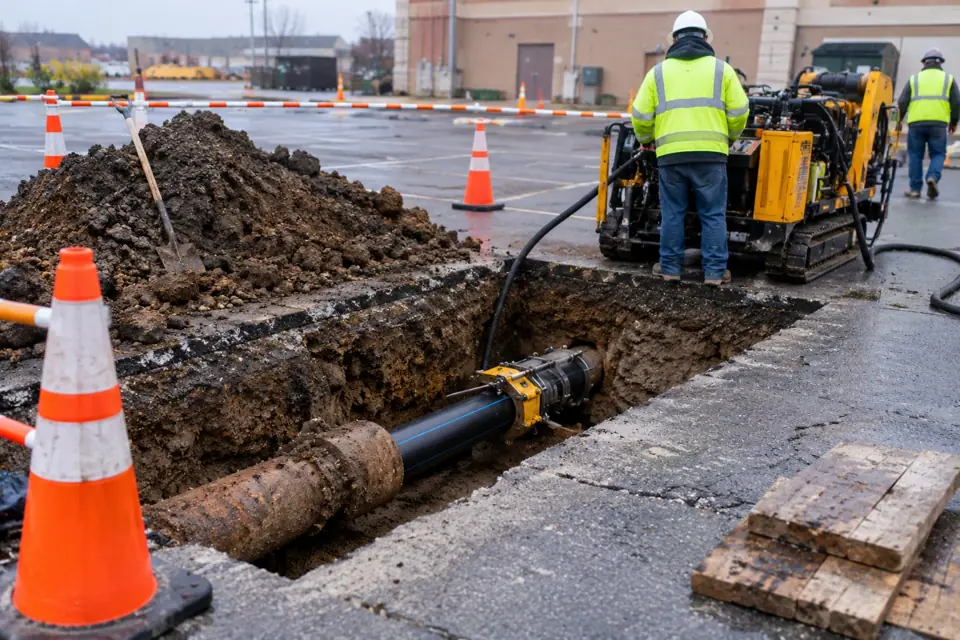
Trenchless replacement costs more per foot than digging, but it avoids most of the restoration bill. When the line runs under concrete, asphalt or a building, trenchless is usually cheaper overall. When it runs under open ground and is shallow, a conventional dig can be the lower number. Ask for both options side by side, with the restoration cost and the days of disruption for each.
| Method | How it works | Best for | Watch out for |
|---|---|---|---|
| Cured-in-place lining (CIPP) | A resin-soaked liner is pulled into the old pipe and hardened, forming a new pipe inside it | Cracked or root-damaged lines that still hold their shape | Slightly smaller inside diameter. Badly collapsed or offset sections must be fixed first |
| Pipe bursting | A bursting head breaks the old pipe outward while pulling a new pipe in behind it | Collapsed or undersized lines, including upsizing for a new use | Needs a launch and a receiving pit, and enough clearance from nearby utilities |
| Spot repair | One failed section is dug up and replaced | A single break or belly with the rest of the line in good shape | Only worth it if the camera shows the rest of the line is sound |
| Full excavation | The line is dug up end to end and replaced | Shallow lines under open ground, or lines too damaged for trenchless | Restoration of paving, sidewalks and landscaping is extra |
Signs a commercial sewer line needs replacing, not just cleaning
Warning signs include a main line that backs up again within weeks or months of being cleared, several fixtures on the lowest floor draining slowly at the same time, sewer odor in the parking lot, a soft or sinking spot over the line, and roots or pipe fragments coming back on the jetting nozzle. A camera inspection is the only way to tell whether the line needs cleaning, a spot repair or a full replacement, so start there before you approve a big number. See sewer camera inspection and repair and hydro jetting.
Who pays: the property owner or the City?
In Austin Water's service area, the private lateral from the building to the City's wastewater system is the property owner's responsibility. Defects in City-owned pipes are the City's to repair. Businesses whose wastewater practices contribute to a sewer overflow may be required to reimburse Austin Water for cleanup and repair.
In a multi-tenant building, the lease usually decides whether the landlord or the tenant pays for the shared line. A camera inspection that shows exactly where the defect is helps settle that question.
How to keep the cost down
Get the camera inspection first and keep the video. It turns a guess into a measured scope, and two contractors can quote the same job. Ask for trenchless and excavated options with restoration included in both. Schedule jetting on a cycle for kitchen lines, so grease doesn't hide a structural problem until it collapses. Fix the line before a new tenant moves in, especially when a restaurant takes over a former retail space and the line is undersized for the new use. Request a camera inspection and list every address you need covered.
Sewer lateral, trenchless lining and pipe bursting: the terms
A sewer lateral is the pipe that carries a building's wastewater to the City's sewer main. Replacing it is the job this guide prices.
Trenchless lining is a repair that cures a new resin liner inside the old pipe, so the line is renewed without digging a trench. Pipe bursting is a replacement that pulls a new pipe through the old one, breaking the old pipe apart as it goes. Both need only small access pits.
Example: 60 feet of lateral under a parking lot
For example, say a camera inspection finds roots and cracked joints along 60 feet of a restaurant's sewer lateral under its parking lot. At $150 to $350 per foot, trenchless replacement would run about $9,000 to $21,000. Add the access pits, the permit and the inspection. The first step is a sewer camera inspection.
If the camera shows only one bad joint, a spot repair at $2,500 to $8,000 may be enough. That section is dug up, and the asphalt over it is patched. If the camera shows only grease or roots, hydro jetting may clear the line for much less.
Related services
Who this guide is for
Frequently asked questions
How much does it cost to replace a commercial sewer line in Austin?
Trenchless replacement typically runs about $150 to $350 per foot, so a 60-foot lateral is roughly $9,000 to $21,000 before access pits and permits. A single spot repair is about $2,500 to $8,000. Excavated replacements under paving are quoted after a camera inspection, because, in our estimates, restoration can match the pipe cost.
Is trenchless sewer repair cheaper than digging?
Per foot, no. Overall, often yes. Trenchless avoids most saw-cutting and repaving, so under a parking lot, sidewalk or slab it usually costs less in total and finishes faster. Under open, shallow ground, a conventional dig can be cheaper.
Who is responsible for the sewer line between my building and the street in Austin?
The property owner. Under City Code Chapter 15-11, as Austin Water's Private Lateral Program explains, the owner is responsible for maintaining the private lateral, including clearing blockages and repairing defects. Defects in City-owned pipes are the City's responsibility.
Do I need a permit to replace a sewer line in Austin?
Yes. Sewer line work on private property needs a City of Austin plumbing permit and an inspection. For commercial properties, a stand-alone Commercial Plumbing Service Line Permit covers the line from the public right-of-way to within 5 feet of the building. Work closer to the building is permitted as regular plumbing work. Your contractor normally pulls the permit as part of the job.
How long does a commercial sewer line replacement take?
Once permitted, trenchless lining or bursting of a typical lateral often takes one to two days (editorial estimate). An excavated replacement under paving can take several days plus restoration. Work can be scheduled overnight or over a weekend to keep a business open.
Why does a commercial sewer line cost more than a residential one?
Commercial lines are often larger in diameter, deeper, longer and under paving or slabs, and the work often has to be done after hours. Many national cost guides focus on 4-inch residential lines under a yard.
Estimate methodology
These ranges are planning estimates prepared by our editorial team for typical commercial laterals in the Austin area in 2026, following our editorial policy. They are editorial judgments, not survey data or collected quotes.
They assume a 6-inch line, normal soil and access from a cleanout or a small pit. They don't include concrete or asphalt restoration, traffic control, tenant shutdown costs or work in the public right-of-way. A contractor prices the real job after a camera inspection.