Key takeaways
- In Austin, backflow assemblies are tested every year, and a repaired assembly must be retested immediately.
- Austin grease traps must be pumped at least every three months by a permitted hauler, with manifests kept for up to three years.
- Other cities set their own rules. Pflugerville allows up to 180 days between pump-outs on written request, if the City approves, and San Marcos tests low-hazard backflow devices every three years.
- Drain jetting, water heater service and valve checks have no legal schedule. In our editorial view, planned work is usually cheaper than an emergency call-out.
- Keep every test report and manifest in one place, and track due dates by address.
A preventive plumbing maintenance checklist is a written schedule of the inspections, tests and cleanings a building's plumbing gets before something fails. For a commercial building in Austin, a few of those tasks are set by law, and the rest are a choice made to avoid emergencies.
This checklist separates the two. It lists what Austin Water requires, how the rules differ in nearby cities, and a suggested schedule for everything else, by month and by property type. Use it on its own, or hand it to a plumber as the starting point for a preventive maintenance plan.
What the rules require in Austin
In Austin Water's service area, two maintenance tasks run on a legal schedule:
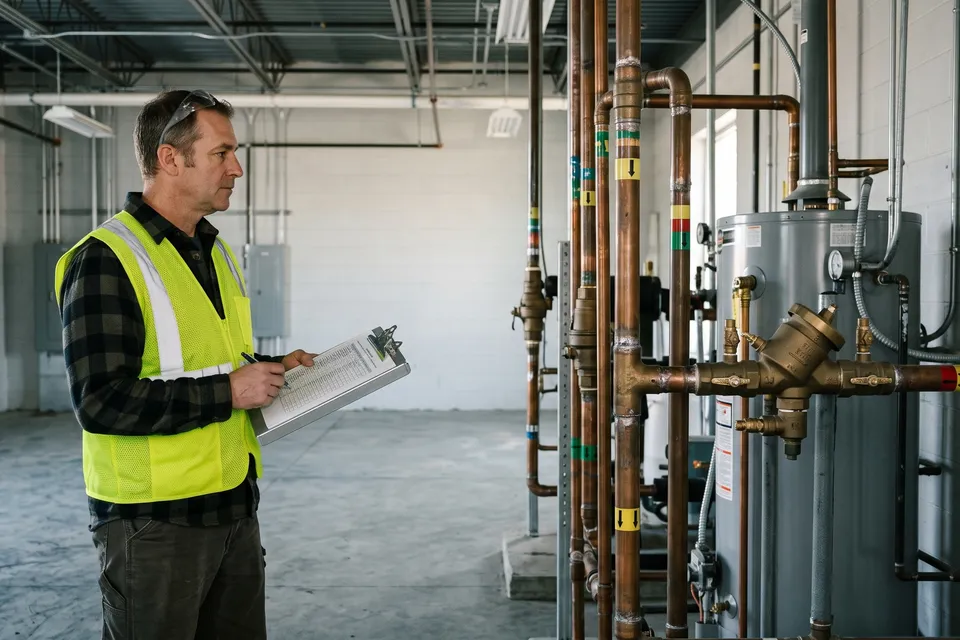
- Backflow testing, every year. Austin Water says backflow devices are subject to annual inspection, testing and reporting by a state-licensed tester registered with the City. Under City Code §15-1-12, a failed assembly must be repaired or replaced before it goes back into service, and a repaired assembly must be retested immediately.
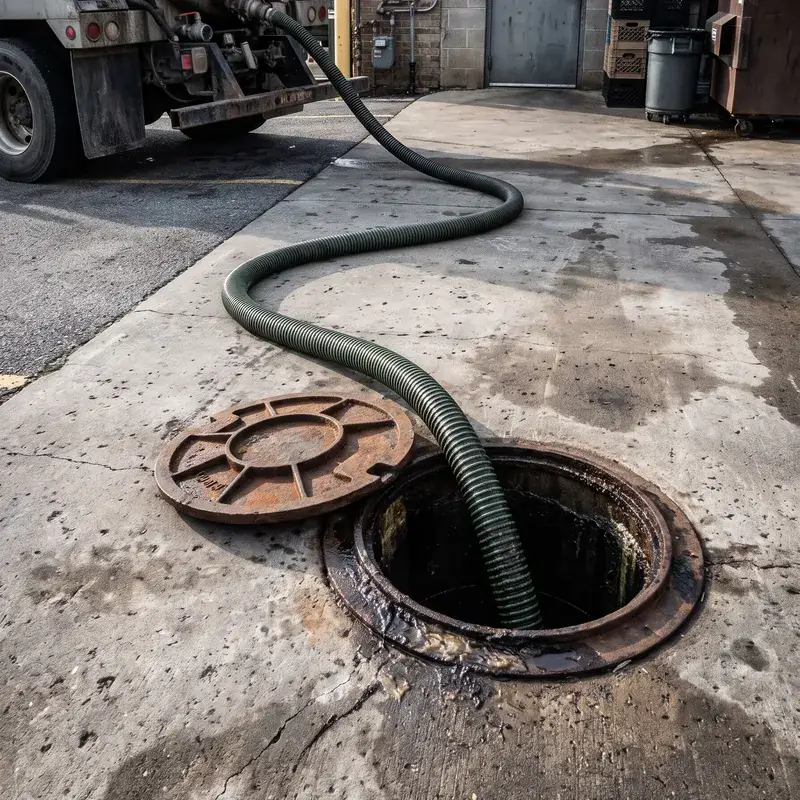
- Grease trap pumping, at least every three months (food service with a grease trap). Austin Water requires cleaning by a permitted liquid waste hauler at least once every three months. The same rule requires pumping sooner when grease and solids reach 50% of the wetted height in the final compartment. Manifests must be kept for up to three years.
Everything else on this checklist is good practice rather than a legal requirement. It's labeled that way below, so you can see which items an inspector can ask about and which ones are your call.
Commercial plumbing maintenance checklist by frequency
These are typical starting points for a commercial building. Items marked Required are Austin rules. Items marked Suggested are our editorial suggestions, to adjust for your building, equipment manuals and history.
Monthly
- Suggested: Walk restrooms and kitchens for running toilets, flushometers that don't shut off, dripping faucets and slow drains.
- Suggested: Read the water meter during a closed period, with all fixtures off. A moving meter points to a hidden leak. See leak detection.
- Suggested: Check floor drains and trap primers in mechanical rooms and kitchens, so sewer gas can't escape through dry traps.
Every three months
- Required (food service with a grease trap): Pump the grease trap, by a permitted hauler, and keep the manifest.
- Suggested: Jet busy kitchen lines, timed with the pump-out. See hydro jetting costs.
Twice a year
- Suggested: Jet quieter kitchen lines and high-use restroom groups.
- Suggested: Check water heater temperature settings, relief valves and venting.
Once a year
- Required: Test every backflow assembly on its due date, and retest after any repair.
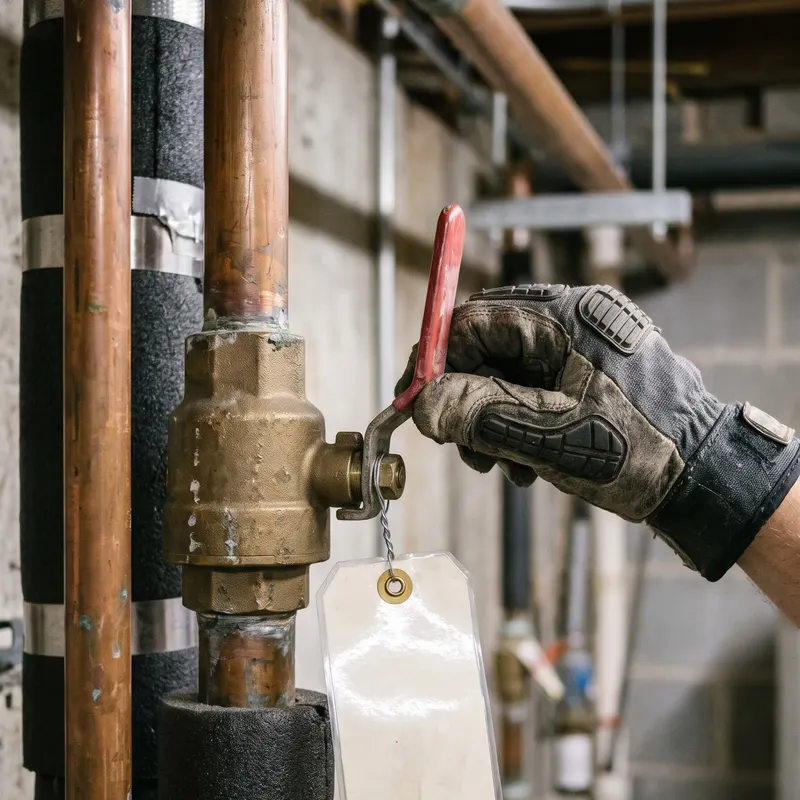
- Suggested: Exercise and label the main and zone shutoff valves.
- Suggested: Check the pressure-reducing valve and building water pressure.
- Suggested: Service water heaters and boilers on the manufacturer's schedule, including flushing or descaling. Austin's water is moderately hard, per our water hardness guide.
- Suggested: Camera-inspect the main sewer line if it has a history of backups.
Before freeze season (October to November)
- Suggested: Insulate exposed pipes and outdoor backflow assemblies, drain irrigation, and confirm heat in vacant suites. Use the full freeze-proofing checklist.
Backflow and grease rules by city around Austin
The water provider sets the backflow and grease rules, so the same checklist changes at the city line. The table below summarizes each city's rules as published on its official pages. Each linked page gives the details and sources.
| Provider | Backflow testing | Grease traps |
|---|---|---|
| City of Austin | Every year; retest right after a repair | At least every 3 months, sooner at 50% of wetted height; manifests kept up to 3 years |
| Round Rock | Every year for high-hazard devices; reports via BSI Online | No single interval; entire contents pumped; ticket kept on site |
| Cedar Park | Annual reports filed via BSI Online | Industrial Pretreatment Program; cleaning frequency declared at connection |
| Georgetown | Tested at building final; then annual or semi-annual (VEPO) | Ask the utility |
| Pflugerville | Every year where required (Ord. 53.003) | At least every 90 days; up to 180 on written request; manifests 5 years |
| Leander | Every year where required; RPZ on irrigation for septic sites | Ask the utility |
| San Marcos | High-hazard every year; low-hazard every 3 years | At least every 90 days; sooner at 25% grease or sediment |
| Kyle | At installation and at least once a year | Ask the utility |
| Travis County WCID 17 | At installation; health-hazard assemblies every year | Ask the utility |
The chart below shows providers with a fixed backflow interval. Georgetown (annual or semi-annual) and Pflugerville, Leander and Cedar Park (annual where required) aren't charted.
If your portfolio crosses city lines, track each address against its own provider's schedule. Our free compliance calendar keeps the due dates in one place.
Checklist additions by property type
Some buildings carry extra items beyond the general list:
- Restaurants. Required: grease trap pumping (above). Suggested: kitchen line jetting, and asking your water provider which assemblies, such as on dish machines or soda systems, it requires you to test. See restaurant plumbing.
- Hospitals. Expected by CMS: CMS expects Medicare-certified hospitals to have water management policies and procedures to reduce Legionella risk. Plumbing maintenance supports that program: dead-leg removal, mixing valve service and flushing records. See healthcare plumbing.
- Dental offices. Required (EPA): under the dental effluent rule, offices that place or remove amalgam must operate and maintain an amalgam separator. Add separator maintenance to the list.
- Schools, churches and other part-time buildings. Recommended by the EPA: the EPA recommends flushing after vacations, weekends and holidays, with signs at each outlet and one person responsible. See schools and churches.
- Apartments and multifamily. Suggested: keep heat on in vacant units through a freeze, and check breezeway and attic piping before winter. See multifamily plumbing.
- Offices and retail centers. Suggested: collect restaurant tenants' grease manifests, and keep one backflow list for the whole property. See property management.
Records to keep
A checklist is only useful if it leaves a paper trail. For each building, keep:
- An assembly list: location, type, size, serial number and last test date for every backflow assembly.
- Backflow test reports, including repairs and retests.
- Grease manifests. Austin requires keeping them for up to three years, and Pflugerville asks for five years. Round Rock asks for the service ticket to be kept on site for City review.
- Work orders for jetting, water heater service and repairs, so service intervals can be set from real history.
What staff can do and what needs a licensed pro
Building staff can handle the walk-throughs, meter readings, trap-primer checks and record keeping. Some items need a licensed or permitted provider:
- Backflow tests need a state-licensed backflow prevention assembly tester. In Austin, the tester must also be registered with the City.
- Grease trap pumping needs a permitted liquid waste hauler in Austin. Pflugerville calls for a TCEQ-registered liquid waste transporter.
- Repairs and replacements to piping, water heaters and backflow assemblies generally need a licensed plumber. Check a license with the Texas State Board of Plumbing Examiners.
Example: one year for a three-building portfolio
For example, take a property manager with an office building in Austin, a retail center with two restaurant tenants in Round Rock, and a medical office in Pflugerville.
The Austin building needs its backflow assemblies tested on their due dates and retested after any repair. The Round Rock center adds annual high-hazard backflow tests filed through BSI Online, plus the restaurant tenants' grease service tickets kept on site. The Pflugerville office adds its annual backflow test where Ord. 53.003 requires one, and the manager collects each assembly's report.
On top of the required items, the manager schedules a monthly restroom walk, jetting with each pump-out, an annual valve exercise and water heater service, and an October freeze walk. All the due dates go into one calendar. A plumber can then quote the whole year as one maintenance plan instead of a string of emergency calls.
Related services
Who this guide is for
Frequently asked questions
What should a commercial plumbing maintenance checklist include?
Two kinds of items. Required items in Austin are annual backflow testing (with a retest after any repair) and, for buildings with a grease trap, pumping at least every three months. Suggested items include drain jetting, water heater service, shutoff valve checks, pressure checks, leak walk-throughs and freeze prep.
How often should a commercial building have plumbing maintenance?
Required tasks follow the rule: yearly for backflow and, where there's a grease trap, at least every three months in Austin. For everything else, a common starting point is monthly walk-throughs, quarterly or twice-yearly jetting, and annual valve, pressure and water heater service. Adjust it to your building's history.
Is preventive plumbing maintenance required by law in Texas?
Not as a whole. State rules (30 TAC §290.44(h)) require backflow assemblies to be tested when installed, and health-hazard assemblies at least once a year. Your water provider sets the details, including grease trap pumping for food businesses. The rest is voluntary maintenance.
Can building staff do backflow testing?
No, unless they hold a state backflow tester license. Backflow tests must be done by a state-licensed backflow prevention assembly tester. In Austin, the tester must also be registered with the City.
How long do I keep grease trap manifests?
In the City of Austin, up to three years. Pflugerville asks for five years. Round Rock asks for the service ticket to be kept on site for City review. Check your own city's rule.
Methodology: how this checklist was put together
Required items come from each water provider's official pages and, for Austin, City Code Chapters 15-1 (backflow) and 15-10 (grease). These were read on 2026-10-26 and are linked from this guide and from our city pages. Dental items come from the EPA dental effluent rule, hospital items from CMS guidance and school items from EPA flushing guidance. The other property-type items are editorial suggestions.
Suggested items and intervals are our editorial team's typical starting points for commercial buildings, not legal requirements. A building's equipment manuals and service history take priority. This guide follows our editorial policy.
Sources
- Austin Water: Backflow Prevention Overview
- Austin Water: Pretreatment Requirements and FAQ (grease traps)
- Austin City Code §15-1-12: Customer Duties
- 30 TAC §290.44 (Water Distribution), via Cornell LII
- City of Round Rock: Backflow Prevention
- City of Round Rock: Surcharge and Grease Program
- City of Cedar Park: Cross Connection and Backflow Prevention
- City of Cedar Park: Industrial Pretreatment
- City of Georgetown: backflow testing (askGTX)
- City of Pflugerville: Cross Connection Control and Backflow Prevention
- City of Pflugerville: Fats, Oils and Grease (FOG) Program
- City of Leander: Cross-Connection Control and Backflow Prevention
- City of San Marcos: backflow FAQs
- City of San Marcos: grease trap FAQ
- City of Kyle: Backflow Prevention Program
- Travis County WCID No. 17: Cross-Connection and Backflow Prevention
- EPA: 3Ts Flushing Best Practices
- EPA: Dental Effluent Guidelines
- CMS: QSO-22-20-Hospitals