Key takeaways
- An indoor grease trap pump-out typically runs about $150 to $400, and an in-ground interceptor about $400 to $1,200 or more (2026 estimates).
- Austin requires a permitted liquid waste hauler to completely empty and clean the trap at least every three months, or sooner at 50% of the wetted height.
- The City charges haulers for disposal on their full truck capacity, $56.91 per 1,000 gallons in FY2025-26. That cost is built into the price you pay.
- Enzymes and bacteria additives aren't a cheaper substitute. Austin Water says never to use them.
- Food service establishments also need an Austin Water wastewater discharge permit, $301.26 a year in FY2025-26.
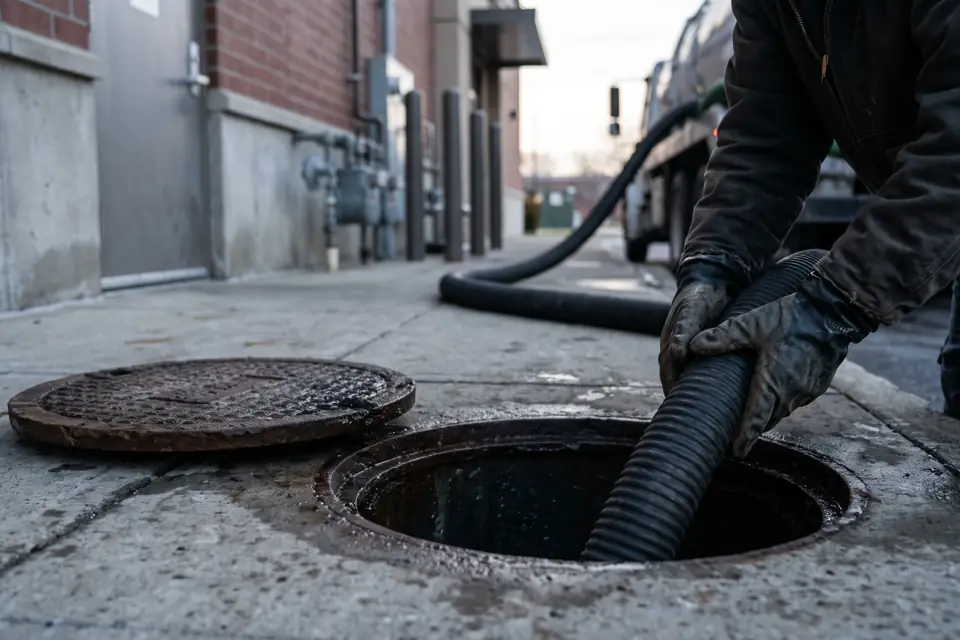
A grease trap is a small unit under or near the kitchen sinks that holds back fats, oils and grease (FOG) before wastewater reaches the sewer. A grease interceptor does the same job at a larger scale, usually as a tank buried outside. Pumping means a vacuum truck removes the contents. Cleaning adds scraping the walls and baffles and checking the parts. In Austin the two go together, because the rule calls for the trap to be completely emptied and cleaned.
Take an illustrative case: a restaurant with an indoor trap pays for at least four required pump-outs a year, so the price per visit sets most of the yearly bill. The ranges below are general Austin-area estimates for 2026, prepared for budgeting. They are not quotes.
| Service | Typical range |
|---|---|
| Indoor grease trap pump-out | $150 – $400 |
| In-ground interceptor pump-out | $400 – $1,200+ |
| Kitchen line jetting at the same visit | $250 – $600 |
| A year of required pump-outs (4 visits, indoor trap) | $600 – $1,600 |
Planning estimates, not quotes (2026). Final price depends on size, access and parts. Your plumber confirms it before work starts. How we estimate
Get a free quoteWhat changes the price of a grease trap pump-out
Size. An indoor trap is small. An outdoor interceptor is much larger, so it takes more truck capacity and more time to empty and clean.
Disposal fees. Haulers pay the City to unload. Austin Water's FY2025-26 fee table lists $56.91 per 1,000 gallons of truck storage capacity at the City receiving station, and the liquid waste hauler program charges on 100% of the truck's capacity. Haulers build that into their price.
How full the trap is. A trap that has gone too long takes longer to clean. The walls, baffles and outlet may need extra scraping.
Access. A clear lid near the truck keeps the visit short. Austin Water asks businesses to keep the trap accessible, with lids unblocked and bolts not seized. A buried lid, seized bolts or a long hose run adds time.
Timing. In our estimates, pump-outs before opening or after close may cost more. If the hauler unloads after hours, the City charges an after-hours receiving fee of $347.08 per two-hour interval, with a two-hour minimum.
Extra work. Kitchen line jetting, baffle or tee repairs, or a replacement lid are billed on top of the pump-out.
Austin's rules that set your schedule
Austin Water requires every grease trap to be completely emptied and cleaned by a permitted liquid waste hauler at least once every three months. It must be done sooner if grease and solids reach 50% of the wetted height in the final compartment. Austin Water's FAQ says manifest records must be retained for up to three years. A manifest is the hauler's signed record of each pump-out: when, how much and where the waste went.
Texas adds its own rule. Under 30 TAC §312.143, each grease trap pumped must be fully evacuated. If the trap holds more than the truck, the transporter must bring more capacity so the trap is emptied within 24 hours. For a large interceptor, that can mean a second truckload on the bill.
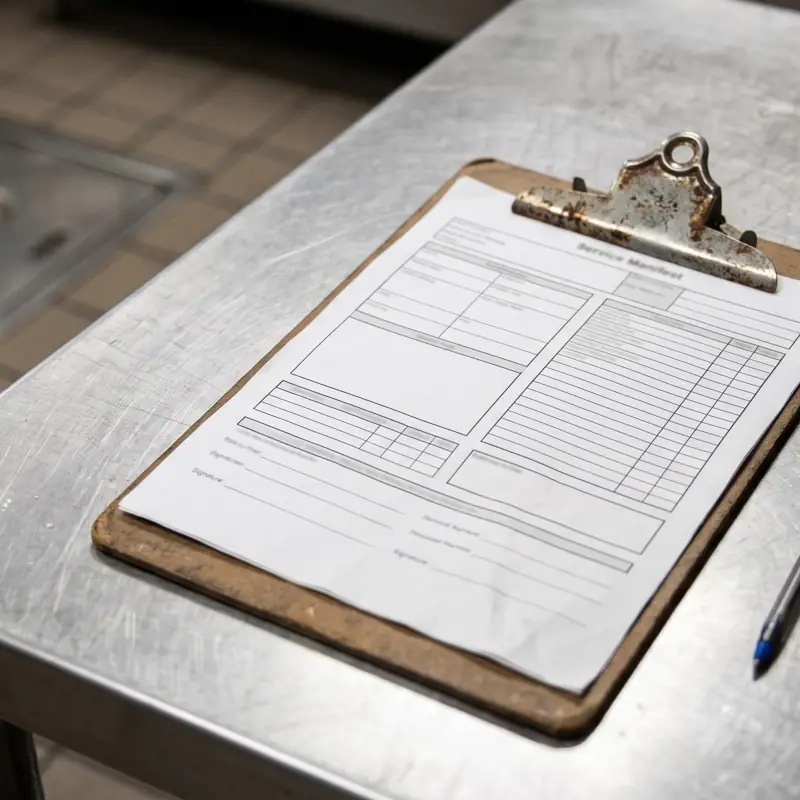
Skipping a pump-out costs more in the end. Austin Water says each missed maintenance or documentation requirement is a separate violation of the City Code, with possible fines and permit revocation.
Grease trap rules in nearby cities
Each city's utility sets its own pump-out schedule, so the rule changes at the city line. The table summarizes each city's rule as published on its official page.
| City | How often | Other rules |
|---|---|---|
| City of Austin | At least every 3 months; sooner at 50% of wetted height | Completely emptied and cleaned by a permitted hauler; manifests kept up to 3 years |
| Pflugerville | At least every 90 days; up to 180 days on written request | TCEQ-registered liquid waste transporter; manifests kept 5 years |
| San Marcos | At least every 90 days; sooner at 25% grease or sediment | Completely pumped out |
| Round Rock | No single interval; depends on the trap | Hauler must pump the device completely empty |
If you run kitchens in more than one city, track each address against its own utility's rule. Our free compliance calendar keeps the due dates in one place.
Austin fees beyond the pump-out
Food service establishments are on the list of General Industrial Users that need an Austin Water wastewater discharge permit. The FY2025-26 fee table lists that permit at $301.26 a year, billed through the City utility bill.
The chart shows the City's disposal charge alone for example truck sizes. For example, a 3,000-gallon truck pays $170.73 to unload. It's the hauler's cost, not a line on your bill. A hauler may service several kitchens before unloading, so the charge is shared, but it's one reason a large interceptor costs more to pump.
New in 2026: the City's Grease Trap Relief Program offers qualifying establishments no-cost grease trap equipment and installation or replacement, beginning Oct. 1, 2026. Pumping and other ongoing maintenance remain the business's cost.
Can enzymes or cleaning it yourself cut the cost?
No. Austin Water says to never use enzymes, bacteria or other agents that would let the trap's contents pass through instead of being held back (City Code §15-10-22(23)). Austin Water notes they only help liquefy grease temporarily.
Cleaning the trap yourself isn't an option in Austin either. Businesses must use a liquid waste hauler with a valid City of Austin permit, and the hauler must be registered with the Texas Commission on Environmental Quality (TCEQ).
How to keep grease trap costs down
Keep grease out of the drains. Scrape plates into the trash and keep fryer oil out of sinks. The less grease that reaches the trap, the longer it takes to reach the 50% mark.
Size the trap right. An undersized trap fills fast. Check it with the grease trap size calculator, which follows Austin Water's sizing criteria.
Jet the kitchen line at the same visit. One visit for both is cheaper than two. See hydro jetting costs.
Keep the lid clear and the manifests filed. A quick visit costs less, and filed manifests show the City you're on schedule.
Put several locations on one schedule. If you manage more than one kitchen, request a quote and list every address so the pump-outs can be routed together.
Example: one year of grease trap costs for an Austin restaurant
A restaurant with an indoor grease trap that needs pumping every three months would budget about $600 to $1,600 a year, at $150 to $400 a visit. Adding kitchen line jetting at each visit, at $250 to $600, brings the year to about $1,600 to $4,000.
A restaurant on an in-ground interceptor would budget about $1,600 to $4,800 or more for four pump-outs, at $400 to $1,200 or more each. If the trap reaches 50% of the wetted height before three months are up, it has to be pumped sooner, and the yearly cost rises.
Separately, the restaurant pays the Austin Water discharge permit fee, $301.26 a year in FY2025-26, through its utility bill. For the full picture of restaurant plumbing, see restaurant plumbing.
Related services
Who this guide is for
Frequently asked questions
How much does it cost to pump a grease trap in Austin?
Typically about $150 to $400 for an indoor grease trap and about $400 to $1,200 or more for an in-ground interceptor. Kitchen line jetting at the same visit typically adds $250 to $600. These are general estimates, not quotes.
How often does a grease trap need to be pumped in Austin?
At least once every three months, and sooner if grease and solids reach 50% of the wetted height in the final compartment. The work must be done by a permitted liquid waste hauler. Austin Water's FAQ also links a reduced grease trap cleaning frequency application, which the City decides on.
Can I clean my own grease trap in Austin?
No. Businesses in Austin must use a liquid waste hauler with a valid City permit, and the trap must be completely emptied and cleaned.
What happens if I skip a grease trap pump-out?
Austin Water treats each missed maintenance or documentation requirement as a separate violation of the City Code. Possible penalties include fines and permit revocation.
Do enzymes or bacteria treatments replace pumping?
No. Austin Water says to never use enzymes, bacteria or other agents that would let grease pass through the trap. They don't replace a pump-out.
Estimate methodology
These ranges are planning estimates prepared by our editorial team for typical commercial grease trap service in the Austin area in 2026, following our editorial policy. They are editorial judgments, not survey data or collected quotes.
Each range assumes a reachable lid, business-hours service and a trap pumped on schedule. They don't include repairs found during the visit, after-hours service or the City discharge permit fee. City fees quoted here come from Austin Water's FY2025-26 fee table (October 1, 2025 to September 30, 2026) and can change each fiscal year.
Sources
- Austin Water: Pretreatment Requirements and FAQ (grease traps)
- Austin Water: Grease Trap Maintenance
- Austin Water: Utility Compliance Services rates and fees (FY2025-26)
- Austin Water: Obtaining or Renewing a Discharge Permit
- Austin Water: Liquid Waste Hauler Program
- Austin Water: Grease Trap Relief Program
- Austin Water: Grease Trap Sizing Design Criteria
- 30 TAC §312.143 (grease trap waste transport), via Cornell LII
- City of Pflugerville: Fats, Oils and Grease (FOG) Program
- City of San Marcos: grease trap FAQ
- City of Round Rock: Surcharge and Grease Program